
Definition
What is brain cancer?
Brain cancer is a condition where the growth of a malignant tumor in the brain. This disease is divided into two types. It consists of primary brain cancer (accounting for as many as 75 percent of all brain tumor cases) whose causes come from the brain, and secondary brain cancer (25 percent of all brain cancer cases) that arise from other body parts and spread to the brain.
About 40 percent of brain cancers begin with neuron support, namely Glial tumor cells. Glial U cells include tumor astrocytes, primary glia tumors, glioma oligodendrocytes, ventricular meningioma, and medulloblastoma.
Secondary types of brain cancer are usually caused by the spread of other cancers, such as breast, lung, kidney, colon, and melanoma cancers on the skin. Brain cancer is a condition that cannot be avoided but most can be dealt with if detected early.
How often does brain cancer occur?
Secondary brain cancer is more common in adults. Primary brain cancer can affect anyone but more often for children under 15 years of age and middle-aged people.
Signs & symptoms
What are the signs and symptoms of brain cancer?
Prolonged headaches are a common symptom of brain cancer because tumors grow pressing against the skull. Headaches usually occur in the morning after waking up and getting sick when coughing and sneezing.
Other symptoms depend on the location of the tumor, but can also cause changes in your daily habits. Here are symptoms of brain cancer:
– Headache, especially in the morning. Headaches can feel light or even heavy
– Muscle weakness that often occurs on one side of the body
– Paresthesia, the body feels like being stabbed with needles and numbness
– The body is difficult to balance and coordination in messy body movements
– Difficulty walking, arms and legs sometimes also become weak
– Seizures
Other brain cancer symptoms and signs that might occur include:
– Changes in mental status. This can be a change in concentration, memory, attention, even confusion without cause
– Feel nausea and vomiting especially in the morning with which can be caused by vertigo
– Abnormalities in vision (for example, double vision, blurred vision, peripheral vision loss)
– Difficulty speaking (caused by noise)
– Gradual changes in intellectual or emotional capacity. For example, it is difficult or has an inability to speak which is followed by not understanding what the other person is saying.
In many people, the above symptoms may be ignored because the symptoms do not occur significantly. Symptoms of brain cancer can grow and run long, but sometimes, these symptoms can also appear more quickly.
In some cases, people might think that the symptoms of brain cancer experienced are stroke conditions, but they aren’t. In some patients, the symptoms may be more pronounced, especially if the cancer is located in a particular brain lobe, which is usually responsible for bodily functions.
Other symptoms may not be mentioned above. If you have questions about certain symptoms, immediately consult a doctor.
When do I have to see a doctor?
Go to a doctor or hospital immediately if you experience ongoing dizziness, sometimes accompanied by convulsions, or other symptoms mentioned above.
Symptoms and signs experienced can vary in each person. Discuss with your doctor about the agreed diagnosis method, treatment, and of course the best treatment for you.
Cancer Stadium
The stage of development of the cancer stage
The growth and symptoms of brain cancer vary depending on the stage of development of the cancer. Cells in tumors that grow fast and aggressively are usually seen on a microscope as abnormal.
The National Cancer Institute (NCI) uses an assessment stage system to classify malignant tumors. Next the stadium:
– Stage I: Cancer tissue in the brain is still benign. Cells look almost like normal brain cells, and cell growth tends to be slow.
– Stage II: The cancerous tissue has begun to malign. Cancer cells begin to look abnormal, unlike stage 1 cancer cells.
– Stage III: Malignant cancer tissue has cells that look very different from normal cells. These abnormal cells are referred to as anaplasik and begin to grow actively at this stage.
– Stage IV: Tissue malignant cancer begins to show abnormal abnormal cells and grow aggressively or very quickly.
To determine tumor growth and development in the brain, doctors focus on tumor characteristics and their effects on brain function. The main factors used to assess brain tumors include:
– Size and location of a tumor or cancer in the brain
– What types or tissues or cells affect the brain
– Resectability (possibility of how much tumor can be removed through cancer surgery)
– How widespread are cancer cells in the brain or spinal cord
– The possibility of cancer has spread to the outside of the brain or not
The doctor will also consider the patient’s age and the symptoms of cancer in the brain. Patients will also be seen, how much basic functions, such as speech, hearing or movement disturbed or changed due to cancer cells in the brain.
Determining the stage of cancer in the brain, the way is quite different from the staging of other cancers in the body.
Cancer in the lungs, large intestine and breast is mapped based on location in the body, size, involvement of lymph nodes, and possible spread. Whereas malignant tumors in the brain are assessed based on how aggressive (malignant) tumor cells appear under a microscope.
The level and ability to develop tumors will also help doctors or experts make treatment decisions. Surgery depends on the condition of the tumor as its location, how big or small its size, how wide the spread of cancer cells is and certainly sees the overall health condition of the patient (including medical history).
Cause
What causes brain cancer?
Brain cancer is a condition that cannot be conclusively concluded. Patients can know whether they experience this condition only through the symptoms and proper diagnosis from the doctor.
Researchers found some changes that occur in normal brain cells can cause them to form tumors and end up becoming brain.
Primary brain tumors arise from many types of brain tissue (eg glia cells, astrocytes, and other types of brain cells). While metastatic brain cancer is caused by the spread of cancer cells from body organs to the brain.
However, the cause of changes from normal cells to cancer cells in metastatic and primary brain tumors is not fully understood. Data collected by research scientists shows that people with certain risk factors are more likely to be at risk of cancer in the brain.
Quoted from Medicine.Net, people who work or are long in the environment such as refineries or oil drilling, fuel handlers, chemicals, chemists, embalmers, or rubber industry workers, have a higher risk of brain cancer than people who work in the environment other than that.
In addition, the risk of offspring such as family members who have a history of cancer in the brain can also influence. However, hereditary factors (genetic transition from parents to children) as a cause of brain tumors have not been proven.
While other risk factors such as smoking, radiation exposure, and viral infection (HIV) have been widely suspected to be the cause, but not proven to cause cancer in the brain.
There is no good evidence that cancer in the brain is transmitted through trauma to the head or caused by cell phone use. The statement that aspartame or artificial sweeteners can cause brain cancer has also not been proven. In fact, the FDA or equivalent to BPOM in America believes that it does not cause cancer in the brain.
Risk factors
What increases my risk for brain cancer?
If you feel some symptoms of brain cancer as mentioned above, immediately schedule a doctor’s consultation and examination as soon as possible. The following factors can increase the risk of brain cancer, including:
– Twilight age
– Radiation exposure
– Descendants
Medicine & Medicine
The information provided is not a substitute for medical advice. ALWAYS consult your doctor.
What are my treatment options for brain cancer?
The following actions can be used to treat brain cancer including surgical removal of tumors, radiation therapy, or chemotherapy.
1. Surgery to remove cancer in the brain
Surgery to remove a malignant tumor in the brain is done by trying to lift all tumor cells by cutting the tumor. The doctor will leave normal brain tissue. This surgery involves opening the skull (craniotomy), which is often called invasive surgery.
Some cancers that attack the brain cannot all be operated on by a surgeon, because in some cases surgery can actually cause the brain to become damaged and even life threatening.
Patients with a diagnosis of brain tumors that cannot be operated on, usually will be given various advice or treatment options as an alternative.
If the patient is to be operated on, the doctor will consider the type and position of the tumor which will determine whether the surgical removal of the tumor can be successful or not. In addition, surgery can also provide a diagnosis of cancer and reduce pressure on the brain.
2. Chemotherapy
Chemotherapy is a common procedure in the treatment of brain cancer, but not for primary brain tumors. Doctors will also give anti-seizure medications such as phenytoin which is often used before and after surgery. For brain swelling, the doctor will recommend using steroid drugs (dexamethasone).
How chemotherapy works is to destroy tumor cells in the body using certain chemicals (drugs). Chemotherapy drugs will kill cells that grow and divide at abnormal speeds, including cancer cells.
Unlike surgery or radiation therapy, chemotherapy does not target an area specifically, so that it can affect the entire body. That’s why the results will also be effective on cancer cells that have spread (metastasized) to other parts of the body.
Unfortunately, chemotherapy is a treatment that will also affect healthy body cells quickly such as skin cells, hair, intestines, and marrow cells.
3. Radiation or radiotherapy
Radiotherapy is a method of treatment that relies on radiation by using high-energy waves such as x-rays, gama, protons, and electrons to kill cancer cells.
Although radiotherapy is most often used to treat cancer patients, but sometimes this therapy is also used to treat non-cancer patients, such as tumors and disorders of the thyroid gland.
Radiotherapy works by damaging DNA that regulates the division of cancer cells, so that cells can no longer develop and even die.
This treatment can also affect the development of normal cells, but the side effects caused will be lost if you have not done therapy.
Unlike chemotherapy which affects all parts of the body because it uses blood flow as an intermediary, radiotherapy is a local treatment that aims to reduce the number of cancer cells without having to damage the cells and tissues around the cancer cells.
But radiotherapy does not always directly kill cancer cells or normal cells that are growing. To make it die and not grow back, it takes days or even weeks.
Normal tissue that is often affected by radiation is the body’s tissues that carry out continuous division, such as the skin, several tissues in the digestive system, and bone marrow.
Therefore, side effects will arise some time after radiotherapy such as fatigue and problematic skin such as itching or irritation will appear after doing therapy.
What are the health tests commonly used to detect brain cancer?
The only way to ensure a diagnosis is to take tissue samples from the tumor and do a microscope test. Testing can be done by biopsy or surgery.
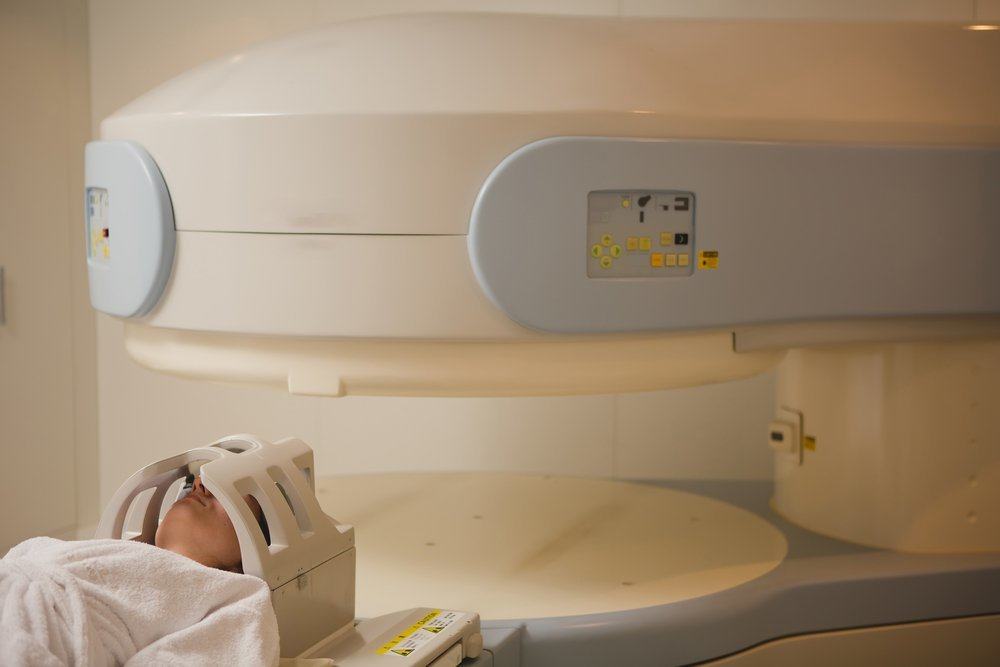
Previously, doctors used magnetic resonance imagery (MRI) to look for cancer, as well as tomography (CT)
Treatment at home
What are the lifestyle changes or home remedies that can be done to deal with brain cancer?
Brain cancer is a disease that can be reduced by the following risks and symptoms through living and home care:
– Coordination with doctors including neuron surgery (specifically for surgery and spine), doctors who specialize in nervous system cancer, radiation therapists for cancer treatment, and your family doctor.
– Perform a repeat check with your doctor. Can be through CT, MRI, or blood tests to check cancer and the dose of Aanda medicine appropriately.
– See a doctor as soon as possible if you experience new seizures or headaches that were not there before, to prevent complications of the disease.
If there are questions, consult your doctor to get clearer information and find the right solution for you.
Hello Health Group does not provide medical advice, diagnosis or treatment.
 Hospital Digital