
Guide to Honey Bee Farming – A lot of information is very helpful for us to launch the business we are working on. Following this you provide information about Honey Bee for all of you. By listening to what we give, hopefully it can help a little what you are needing. Look carefully at the information below.
Bees or languages that are more friendly in my village are Wasps, bees of this type can produce very much honey, but these bees depend on the season. some types of honeybee that are worth cultivating. Among them, bees from forest bee species (Apis dorsata), local bees (Apis cerana), and superior bees (Apis mellifera). Superior bees, as the name implies, are the most favored by the market. This type is more productive than local bees, also more tame. The poison in the sting is very suitable for the treatment of various diseases. The bee cultivated by most breeders in the world, originally, originated from mainland Europe.
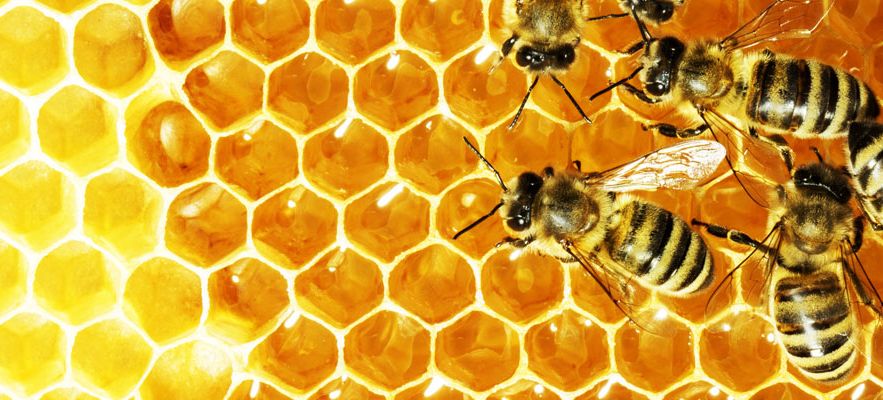
HOW TO NATURALLY HONEY HONEY FEED
The capital needed in raising honey bees is the basic knowledge in raising honey bees. The fixed capital investment needed in honeybee cultivation during several harvesting periods is a minimum of 40 boxes of production equipment and honey bee colonies – ideally 100 boxes of honey bee colonies.
The selection of superior types of honey bee seeds
Super quality honeybee seedlings characteristics:
1. Having a queen of bees who are physically good and aged between 3 months to 1 year.
2. The number and quality of eggs produced by the queen bee, many.
3. More crops, both honey, bee pollen, royal jelly, and propolis.
4. The resulting bee larva is fresher.
5. Bees are usually more aggressive.
Increase honey bee colonies
In raising honey bees to produce optimal profits, a honey beekeeper must have – at least – 100 boxes of honey bee colonies.
The steps to increase the number of honeybee colonies are as follows.
– Feed honey bees in locations where there is enough feed. With the availability of sufficient feed, the queen bee will produce more eggs and worker bees will also be more active in making new nests.
– Prepare prospective queen honey bees to be placed in new honeybee colonies.
– Separating solid honeybee colonies into a new honeybee colony box, and placing prospective new bee queens or other established queens.
Make prospective queen bees
– Take newly hatched honeybee larvae; age of 1 day.
– Enter into one piece of royal jelly frame.
– Frame royal jelly that has been filled with honeybee larvae is placed in a super box (honey bee box containing honey bee colonies, at least 2 levels).
– Separate the super honey bee box, the bee queen is in the bottom box, and the prospective royal jelly frame of the honey bee is placed on the top box. Thus, the queen of honey bees cannot approach the prospective queen of honeybees.
– Let stand for 11 days until the prospective queen bee becomes a cocoon.
– After eleven days, the prospective queen bee was transferred to a bee box that contained a colony of bees without their queen.
– After 13 days, the prospective queen bee came out of the cocoon and was immediately appointed to be a queen of bees by the bee colony
– Usually, after a week, the queen bee is ready to mate and develop a new bee colony in that place.
Equipment for raising honey bees
– Bee box, which is a place for honey bee colonies, made of suren or mahogany wood
– Smokers to tame aggressive honey bees
– Honey bee attack protective mask
– Comb levers
– Brush honey bee combs
– Combs made of wood frame and in the middle are given wire as a barrier to the honeycomb’s nest
– Pollen trap for harvesting bee pollen
– Frame royal jelly to harvest royal jelly and make prospective queen bees
– Extractor for honey harvesting.
Grazing honey bees
Between May and September is the time that beekeepers feed their honey bees to plantations that provide enough honey bee feed.
Honey beekeepers on the island of Java, in general, herd honey bees into rubber, kapok, rambutan, longan, mango, coffee, and duwet plantations, resulting in honey based on the specifications of the type of flower.
It is between May and September when honey beekeepers enjoy the “sweetness” of income from honey bees, such as: honey from various types of flowers, bee pollen, and royal jelly.
After September, honey beekeepers experience a famine, because the honey season has passed. To cover the costs of honey bee care, in general, farmers feed their bees to corn plantations. Here, honey beekeepers can produce bee pollen corn and royal jelly.
Honey Bee Pests
Pests that often interfere with bees include:
– Birds, as animals that also eat insects, make bees one of their foods.
– Lizards & Frogs, the interference caused by birds.
– Ants, build nests in bees & take food from bees.
– Butterflies, eggs of butterflies that hatch in combs become caterpillars which can damage the combs.
– Rat, seize honey & damage the combs.
You have seen the Guide to Honey Beef Cultivation, We also share the other information, namely the Guide to How to Cultivate Crickets and How to Hatch Duck Eggs Quickly and Correctly for the source of your knowledge, thank you for helping.
 Hospital Digital