
– Technique of Cultivating Pomfret and How to Enlarge Pomfret
The way to cultivate provides information for all of you who are looking for solutions to how to solve problems. Because searching for information is very important for us for the effort that we are doing in order to obtain maximum results. Because the following is information about the Cultivation of Pomfret which we gave to all of you, see the information carefully.
How to Cultivate Pomfret – Pomfret is similar to carp but is different except that the shape is similar to a little. but for the taste not less different from the gurme fish. Pomfret cultivation is mostly carried out by freshwater pomfret farmers in Indonesia, this is because materials and places for cultivation are very easy to reach or obtain without having to require extensive materials and land.
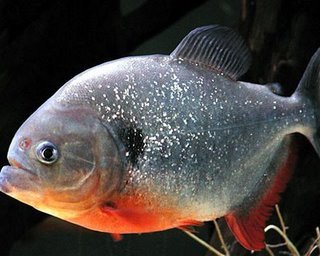
Freshwater pomfret is very high demand, because freshwater pomfret is not much different from saltwater pomfret which has nutritional quality and a fairly thick texture of meat. So it is not surprising that many fish farmers are glancing at this pomfret cultivation.
How to Cultivate Pomfret
Pond preparation for Bawal fish farming
Preparation of pomfret ponds is intended to grow natural foods in sufficient quantities. After the bottom of the pond is completely dry, the bottom of the pool needs to be calcified with calcium lime and dolomite at a dose of 25 kg / 100 square meters.
This is to increase soil pH, also to kill pests and pathogens that are still resistant to the drying process.
Enlargement ponds are not absolutely necessary. This is because the food of pomfret is mostly obtained from additional or artificial food. But if fertilized can use manure 25-50 kg / 100 m2 and TSP 3 kg / 100 m2. Manure that is used must be really cooked, so as not to be toxic to fish.
After the fertilization work is finished, the pond is filled with 2-3 cm high water and left for 2-3 days, then the pool water is added little by little to the initial depth of 40-60 cm and is constantly arranged to a height of 80-120 cm depending on fish density. If the water color is bright green, new fish seeds will be stocked (usually 7 ~ 10 days after fertilization).
Selection and stocking of pomfret seeds
Only with good seeds, pomfret will live and grow well. Spread of seeds Before seeds are stocked, they need to be adapted, with the aim that the fish seeds are not under stress when in the pond.
How to adapt: fish that are still wrapped in plastic that is still tightly closed is inserted into the pool, leaving the plastic wall to condense.
This is a sign that the pool water and water in the plastic are the same temperature, after which the plastic is opened and the water in the pool gradually enters into the plastic where the seeds are until they are in good condition. Then the seeds are spread slowly in the fish pond.
Selection of Pomfret Seeds
The selection of seeds is absolutely important, because only with good seeds the fish will live and grow well.
The characteristics of good seeds include healthy, complete body parts, active moves, uniform size, not deformed, no disease, superior type.
Seed spread
Before the seeds are stocked it needs to be adapted, with the aim that the fish seeds are not in a state of stress while in a pond. How to adapt: fish that are still wrapped in plastic that is still tightly closed is inserted into the pool, leaving the plastic wall to condense. This is a sign that the pool water and water in the plastic are the same temperature, after which the plastic is opened and the water in the pool gradually enters into the plastic where the seeds are until they are in good condition. Then the seeds are spread / released in the pond slowly.
Feed Quality and Ways to Provide Pomfret
Only with good food can fish grow and develop according to what we want. Good quality of feed is food that has balanced nutrition both protein, carbohydrate and fat as well as vitamins and minerals.
Because pomfret is omnivorous, the food can be either leaves or pellets. Feed is given 3-5% body weight (estimated total amount of fish maintained). Feeding can be directly stocked.
 Hospital Digital