Law Refuses Sharia Law in Islam

As Muslims, we are obliged to carry out the Islamic Shariah as a whole. Allah SWT said in the letter An Nisa ‘verse 65 which means,

“So for the sake of your Rabb, they (in essence) are not believers until they make you a judge of the case they are disputing, then they don’t object in their hearts to the verdict that you gave, and they accept it completely.” (QS. An Nisa ‘: 65).

The verse states that for anyone who fully accepts the law brought by the Prophet sallallaahu aih alaihi wasallam in each of their affairs they are said to be believers.

Therefore, Muslims should not neglect, let alone reject the sharia of Islam in every aspect of life.

However, we also cannot deny that there are not a few Muslims who reject the application of sharia law.

The reasons also vary and this also has various legal consequences. The following are reasons for the rejection of sharia law and the accompanying legal consequences.

Refuse sharia law because it has the belief that man-made law is better or equal to Allah’s law and therefore to rule other than sharia law is permissible. The scholars agree that those who have views like this are infidels.
Refusing sharia law because it has worldly interests even though deep down he acknowledges that this is a big sin in Islam and is a gross violation. The scholars argue that those who have such a view as true have turned down, a great immorality, and small kufr.
Refuse sharia law because of ignorance of Islam and its sharia. The scholars refer to them as ignorant people. To deal with people like this, the scholars and other Islamic scholars must continue to enlighten Islam in its entirety.
Thus, in general it can be said that we must implement or enforce sharia law in every aspect of life.

And if we don’t do it, the law is sinful. But some scholars say that sin because it does not carry out sharia law does not result in apostasy.

Allah SWT says in the letter Al Maidah verse 44 which means,

“Whoever does not decide according to what Allah has revealed, then they are those who disbelieve.” (Surah Al Maidah: 44).

The above verse seems to condemn Muslims who do not implement sharia law.

And this led to disagreement among the scholars referring to what was stated by Al-Bhagawi in Tafsir Al-Baghawi. Ibn Abbas and Thawus said,

“Not an infidel out of religion, but if he does it, he is kufr, but it is not like the one who kufr to Allah and the End Times.”

Meanwhile, Ikrimah said,

“The meaning of this verse is that anyone who does not use the law of Allah because of disbelief and disbelief, but whoever continues to acknowledge the law of God but does not apply it is called zhalim and fasiq.”

Still related to the verse above, Abdul Azis bin Yahya Al-Kinani states that this verse applies if it does not do all that God has revealed not in part.

So everyone who does not punish with all that Allah has sent down will be unbelieving, wrongdoing, and evil.

Whoever uses the law of God such as tawhid and leaves shirk and does not punish with all the Shari’a which Allah has sent down, and is not subject to the law of this verse.

Some scholars argue that the verse Al Maidah verse 44 is actually intended for Jews and not for Muslims.

Because the Jews changed their scriptures and imposed the law of the contents of the changed book.

Al-Baghawi in Tafsir Al-Baghawi stated,

“Some scholars say,” The Qur’an shows that this verse is for the Jews because Allah mentioned in the previous verse that they have changed the sentence of Allah.

And they say, “You are given this.” Namely, a law that has been changed which is not God’s law, so take it. If you are not given this law (which has been changed) but given the law of Allah, then be careful. They ask to be careful of the law of God that they know is true. “

Thus a brief review of the law rejecting sharia law. Other articles that can be read include the sources of Islamic law, the main sources of Islamic teachings, apostasy in Islam, the law insulting the Qur’an, the punishment of insulting the Qur’an, the law insulting Allah in the heart, the law insulting the lafadz of Allah, the law insulting Islam , and law insulting scholars in Islam. May be useful.

Rules Piss And Poops In Islam and Its Proposal

So perfect is the religion of Islam that every aspect of human life has been regulated according to Islamic law. Likewise, even the smallest things, such as urinating.

In Islam, there are a number of defecations that must be obeyed. The following are some adab poems in Islam:

1. Not seen by others

From Jabir bin ‘Abdillah radhiyallahu‘ anhu, he said,

حهتتِى الْبَرِىازَ حَتَّى يَتَغَيَّبَ فَلاَ يُرَى. خَرَجْنَاُ لَََََّّلللل

“We once went out with the Prophet sallallaahu‘ alaihi wa sallam when safar, he did not fulfill his wish in an open area, but he went to a distant place until it was not visible and invisible. “

2. Not carrying objects with God’s writing

Allah Ta’ala said,

ذَلِكَ وَمَنْ يُعَظِّمْ شَعَائِرَ اللَّهِ فَإِنَّهَا مِنْ تَقْوَى الْقُلُوبِ

“Thus (the command of Allah). And whoever glorifies the syi’ar-syi’ar Allah, then indeed it arises from the piety of the heart. “(QS. Al Hajj: 32)

The point is that some objects have the writing of God’s name, such as rings or necklaces with the size of the name of Allah. Bringing these objects is prohibited in Islam.

But if you cover the ring or necklace with a cloth or other cover, it is permissible.

Syaikh Abu Malik hafizhohullah said, “If the ring or something is closed or put in a pocket or other place, then it may be put into the toilet. Imam Ahmad bin Hambal said,

“If he wants, he can put the item in his hand.” If he is afraid that the item will be lost because it is placed outside, then he can enter the bathroom with the item for reasons of an emergency.

3. Read the prayer before entering the bathroom

Word of the Prophet sallallaahu ‘alaihi wa sallam,

سَتْرُ مَا بَيْنَ أَعْيُنِ الْجِنِّ وَعَوْرَاتِ بَنِى آدَمَ إِذَا دَخَلَ أَحَدُهُمُ الْخَلاَءَ أَنْ يَقُولَ بِسْمِ اللَّهِ

“The barrier between the view of the jinn and the human genitals is if one of them enters the dump, then he says” Bismillah “.”

From Anas bin Malik, he said,

كَانَ النَّبِىُّ – صلى الله عليه وسلم – إِذَا دَخَلَ الْخَلاَءَ قَالَ «اللَّهُمَّ إِنِّى أَعُوذُ بِكَ مِنَ الْخُبُثِ وَالْخَبَائِثِ»

“The Prophet sallallaahu‘ alaihi wa sallam when entering the toilet, he said: Allahumma inni a’udzu bika minal khubutsi wal khobaits (O Allah, I take refuge in You from male devils and female demons. “

An Nawawi rahimahullah said, “This kind of prayer to read prayers is not distinguished for inside or outside the building.”

4. Enter with your left foot and come out with your right foot

As contained in the hadith,

كَانَ النَّبِىُّ – صلى الله عليه وسلم – يُعْجِبُهُ التَّيَمُّنُ فِى تَنَعُّلِهِ وَتَرَجُّلِهِ وَطُهُورِهِ وَفِى شَأْنِهِ كُلِّهِ

“The Prophet sallallaahu aih alaihi wa sallam preferred to put the right one first when wearing sandals, combing his hair, when washing and in every case (which is fine).”

Syaikh Ali Basam said, “Putting the right for a good case, this is shown by the syar’i argument, the logical argument and supported by good nature. As for the bad case, the left one is used. This is more appropriate based on the syar’i argument and logic. “

Ash Syaukani rahimahullah said, “As for putting the left foot when entering the toilet and right foot when exiting, then it has a reason from the side that the Prophet sallallaahu aih alaihi wa sallam preferred to put the right for good things first.
As for things that are bad (dirty), he prefers to put the left one first. This is based on a global proposition. “

5. Do not face the Qibla or turn to it

From Abu Ayyub Al Anshori, the Prophet sallallaahu ‘alaihi wa sallam said,

«ا أَتَيْتُمُ الْغَائِطَ فَلاَ تَسْتَقْبِلُوا الْقِبْلَةَ وَلاَ تَسْتَدْبِرُوهَا ، وَلَكِنْ شَرِّقُوا أَوْ غَرِّبُوا». قَالَ أَبُو أَيُّوبَ فَقَدِمْنَا الشَّأْمَ فَوَجَدْنَا مَرَاحِيضَ بُنِيَتْ قِبَلَ الْقِبْلَةِ ، فَنَنْحَرِفُ وَنَسْتَغْفِرُ اللَّهَ تَعَالَى

“If you go to the latrine, then you should not face the Qibla and turn to it. However, face east or west. “

Abu Ayyub said, “We used to live in Sham. We found that our latrine was built facing the Qibla direction. We also changed the direction of the place and we begged forgiveness of Allah Ta’ala. “

6. Don’t speak except emergency

From Ibn ‘Umar radhiyallahu‘ anhuma, he said,

أَنَّ رَجُلاً مَرَّ وَرَسُولُ اللَّهِ -صلى الله عليه وسلم- يَبُولُ فَسَلَّمَ فَلَمْ يَرُدَّ عَلَيْهِ.

“There was someone who passed by the Prophet sallallaahu‘ alaihi wa sallam and he was urinating. At that time, the person said greetings, but he did not reply. “

Syaikh Ali Basam said, “It is forbidden to talk to other people when defecating because this kind of action is a contempt, showing a lack of shame and degrading murua’ah (self-esteem).” Then he postulated with the hadith above.

Syaikh Abu Malik said, “We already know that answering greetings is mandatory. When exhorting the Prophet sallallaahu ‘alaihi wa sallam left him, then this shows that he was forbidden to speak at that time, moreover if the conversation contained dzikir in Allah Ta’ala.

However, if someone speaks because there is a need that must be done at that time, such as pointing the way to the person (when asked at that time, the pen) or wanting to ask for water and the like, then it is allowed at that time for emergency reasons. Wallahu a’lam. “

7. Not defecating on the road or shelter of humans

from Abu Hurairah, the Prophet sallallaahu ‘alaihi wa sallam said,

«اتَّقُوا اللَّعَّانَيْنِ». قَالُوا وَمَا اللَّعَّانَانِ يَا رَسُولَ اللَّهِ قَالَ «الَّذِى يَتَخَلَّى فِى طَرِيقِ النَّاسِ أَوْ فِى ظِلِّهِمْ».

“Be careful with al la’anain (the person cursed by humans)!” The Companions asked, “Who is al la’anain (the one cursed by humans), O Messenger of Allah?” He said, “They are the ones who throw away hajat on the road and place where humans live. “

8. Clean with your left hand

From the hadith of Abu Qotadah, the Prophet sallallaahu ‘alaihi wa sallam said,

إِذَا شَرِبَ أَحَدُكُمْ فَلاَ يَتَنَفَّسْ فِى الإِنَاءِ ، وَإِذَا أَتَى الْخَلاَءَ فَلاَ يَمَسَّ ذَكَرَهُ بِيَمِينِهِ ، وَلاَ يَتَمَسَّحْ بِيَمِينِهِ

“If one of you drinks, don’t breathe in a vessel. If he defecates, do not hold the genitals with his right hand. Nor should he rest with his right hand.

That’s 8 adab poops in Islam that need to be known. Thus this short article. Hopefully this article benefits us all and adds to our faith. Aamiin.

The Law of Marriage Different from Islam and Non-Muslims

Marriage is something that is recommended in Islam. The law of marriage is sunnah muakkad which is the preferred sunnah. Getting married is a complementary religion and is a form of worship to Allah Ta’ala. Getting married also has many virtues in Islam. In addition to producing offspring, marriage also avoids immoral acts and makes the heart feel more peaceful.

Allah Subhanahu wa Ta’ala says in the Qur’an which means:

“And among His signs of authority is He created for you wives of your own kind, so that you will tend and feel secure to him, and He will make you love and affection. Verily in that there are indeed signs for those who think. “(Surat ar. Ruum: 21).

Because marriage is something sacred, of course it should not be done carelessly. Moreover, for Muslims, marriage must fulfill religious principles and shari’a. In general there are 4 factors that need to be considered in finding a mate. Among them are religion, nasab, wealth and face.

Well, what is the statement about religious interfaith marriage? Approximately may Muslim women marry non-Muslim men, or vice versa? Here’s the full review!

Islamic view of different religious marriages
The law of marriage of religious differences in Islam, including the issue of khilafiyah, is debated. However, the majority of scholars and MUI decided that interfaith marriages in Islam were haram (not allowed).

1. Haram
The majority of scholars from the 4 mahzhab, MUI, NU, Muhammadiyah and others have agreed that marrying non-Muslim men or women is illegal. This statement is based on the arguments of the Koran Surat al-Baqarah verse 221 and Al-Mumtahanah verse 10 which explains that believers are prohibited from marrying polytheists. Getting married to an infidel is not permissible in Islam.

“And do not marry polytheists, before they believe. Surely the slave woman Mu’min is better than the polytheist woman, even though she attracts your heart. And do not marry the idolaters [with the women of Minin] before they believe. Surely the servant of Mu’min is better than the polytheist even though he attracts your heart. They invite to hell, while God invites to heaven and forgiveness with His permission. And God explained His verses [His commandments] to people so that they took lessons. ” (QS Al-Baqarah: 221)

“O ye who believe, when you come to you believing women who emigrate, then let them test them. Allah knows more about their faith, so if you have known that they are (truly) believers, then do not return them to (their husbands) unbelievers. they are not lawful for the unbelievers, and those who disbelieve are not lawful for them. and give to their husbands, the dowry that they have paid. and there is no sin upon you to marry them if you pay them their dowry. and do not hold on to a rope (marriage) to unbelieving women; and ask for the dowry that you have paid for; and let them ask for the dowry that they have paid. Thus is the law of God which He has established among you, and Allah is All-Knowing, Wise. “(QS. Al-Mumtahanah: 10)

2. Allowed (between makruh and mubah)
Opinions from the second cleric about interfaith marriage law between makruh and mubah. Their statement is based on the letter Al-Maidah verse 5 which explains that marrying an ahlul kitab woman is lawful for a believer. But with conditions,

Ahlul Kitab women have never committed immoral acts, such as adultery and the like
Only Muslim men may marry Ahlul Kitab women, while Muslim women may not marry men of different faiths.
Why is that? Because the position of women in the family is to become a makmum. Not necessarily able to guide her husband. So if her husband is non-Muslim, it can risk damaging the foundation of the faith of the household.

 “Today it’s fine for you to be fine. the food of those who are given the Book is lawful for you, and your food is lawful for them. (and It is permissible to marry) women who guard honor among women who believe and women who guard honor among those who are given the Book before you, if you have paid for their dowry with the intention of marrying, not for the purpose of adultery and not making it concubines. Whoever disbelieves after believing (does not accept Islamic laws) Then erase his deeds and he on the Day of Judgment Including those who are losers “. (QS. Al-Maidah: 5)

It is permissible for Muslim men to marry Ahlul Kitab women because of the opinion that the women of the Ahlul Kitab are different from the Mushrik women. However, in the letter Al-bayyinah Allah Ta’ala explained that the scribes and idolaters included infidels.

“Verily those who disbelieve are the experts of the Book and those who are polytheists (will enter) to hell. they abide therein. they are as bad as creatures. “(Surat al-Bayyinah: 6)

From the explanation above, it can be concluded that interfaith marriages are not recommended in Islam, even forbidden. Even though there are some that allow, we can see that ancient scribes were indeed different from today. Moreover, the holy books besides the Qur’an (such as the gospel or law) have also been modified by humans.

We better marry other Muslims. Because the main requirement in finding a partner is religion and morality. That way the household life will become mawaddah, sakinah and rahmah.

Musailamah the False Prophet

Names may be imitated, designations may be equated, but the essence is still different. People say, “You can imitate everything you want, but you will never be me.” Hopefully that is a proper expression given to them imitators and those who like to confess.

Confessing and claiming in the material world is certainly not good and is not a habit of praiseworthy people. How would it also claim in the matter of receiving divine revelation. As done by Musailamah al-Kadzab. This son of the Hanifah claimed to be a Prophet.

Who is Musailamah?

Historians differ in their names. Some say he is Musailamah bin Hubaib al-Hanafi. Others say Musailamah bin Tsamamah bin Katsir bin Hubaib al-Hanafi. Some say the kun-yah is Abu Tsamamah. Some call it Abu Harun.

Musailamah was born in the Yamamah region. In a village now called al-Jibliyah. Close to Uyainah in the Hanifah valley of Nejd region.

Musailamah’s age is older and longer than the Messenger of Allah ﷺ. Some say he was killed at the age of 150 during the Yamamah War. He was a religious figure in Yamamah and had followers before the apostolic revelations came to the Prophet Muhammad ﷺ.

Before claiming to be a prophet, Musailamah often walked the streets. Enter markets that are crowded by Arab and non-Arab communities. Meet people of various professions there. The market he visited was such as the market in the area of ​​al-Anbar and Hirah (Futuh al-Buldan by al-Baladzuri, Hal: 100).

Musailamah is someone who has a strong personality (strong personality). Good at talking. Having influence in the midst of the Hanifah and the neighboring tribes. His words were gentle but deceptive. Clever to attract sympathy, for both men and women. He calls himself Rahman al-Yamamah. But God is different. He is known as Musailamah al-Kadzab (Musailamah the liar) to this day.

When Musailamah announced his prophethood (false prophet), Rasulullah di was in Mecca. He sent people to Mecca to listen to the Koran. Then go back to Yamamah to read it to him. After that he imitated or played back to the people while claiming it was his greeting (Tarikh al-Rusul wa al-Muluk by Tabari, 3: 295).

Messenger of the Banu Hanifah Met the Messenger of Allah

Among the methods of preaching the Prophet ﷺ was to write a letter to the rulers and kings. Call them to embrace Islam. The call for da’wah arrived at Haudzah bin Ali al-Hanafi. A ruler of Yamamah who is a Christian. After receiving the letter, Haudzah proposed the condition that power be given to him. The Prophet ﷺ refused. Not long after that Haudzah died.

In the 9th year H, figures of the Hanifah numbering a dozen or more men came to meet the Prophet ﷺ in Medina. Among them is Musailamah. They came to announce Islam to the Prophet ﷺ. And agreed that the Prophet ﷺ was the leader.

Banu Hanifah including the largest Arab tribes. They have a position and prestige. Feeling worthy of leadership, they submitted a leadership request. They wanted Musailamah to replace the Prophet after he died. The Prophet ﷺ refused their request.

The descendants of the Hanifah were disappointed and began the desire to leave Islam. And the Prophet menangkap has caught this signal. When they were about to return to Yamamah, they said to the Messenger of Allah ﷺ, “Indeed, we left one of our friends in our provisions to guard it”.

Rasulullah ﷺ responded, “His position (Musailamah) is not worse than your position”. This means that even though he is an officer who keeps your supplies, it does not mean that he is lower than you. They also returned to Yamamah with gifts from the Prophet ﷺ.

The words of the Prophet ﷺ to Musailamah were made a word of recommendation by Musailamah and other figures. They claim that the Prophet Muhammad id meridhai Musailamah was his successor. Soon Musailamah announced his prophethood in the midst of the Hanifites. From then on he was known as Musailamah al-Kadzab.

Then the Prophet ﷺ appointed Nuharur Rijal bin Unfuwah to teach religion to the residents of Yamamah. Ibnu Unfuwah is a knowledgeable, broad-minded and intelligent man. Who would have thought, it turned out that Ibn Unfuwah actually joined Musailamah. His sincerity in the presence of the Messenger of Allah ﷺ was only mere riya. Ibn Unfuwah acknowledged Musabamah’s prophethood. According to him Musailamah was with the Prophet Muhammad ﷺ in the prophetic message. The Hanifah people also sympathized with him. And Musailamah made him a believer (Futuh al-Buldan by al-Baladzuri, Hal: 97, Dach-ar-Rusul wa al-Muluk by Tabari, 3: 137-138, and al-Bidayah wa an-Nihayah by Ibn Kathir, 5: 50-52).

Rasulullah ﷺ Reply to a Letter with Musailamah

After his prophetic claim was received in the midst of his people, Musailamah’s confidence grew. The further heresy. He began to position himself as a messenger of God. He imitated Prophet Muhammad wah who preached through letters to kings and rulers. Because of his confidence, he sent a letter to the Prophet Muhammad:

من مسيلمة رسول الله, إلى محمد رسول الله: سلام عليك, أما بعد, فإني قد أشركت في الأمر معك, وإن لنا نصف الأرض, ولقريش نصف الأرض, ولكن قريشا قوم يعتدون

“From Musailamah an apostle to Muhammad an apostle.

Safety for you, Amma Ba’du:

Really I am the same as you in this apostolate. For us, certain parts of the earth and for other parts of the Quraysh. But the Quraysh are people who transgress. “

Pay attention, the callers of heresy have always been used to using beautiful word choices to deceive humans. Musailamah called the Prophet Muhammad a person who transcended limits. Because they want to dominate the entire Arabian Peninsula. While he hinted that he was a wise person because he wanted to share.

Likewise, the callers of heresy in this age, they use beautiful language to captivate the heart. They call their teachings enlightening while holding on to the Koran and the sunnah are awkward and rigid. They call their teachings tolerant. While others are radical.

Rasulullah ﷺ did not want to miss this opportunity. He did not want these doubts and ambiguities to spread. He also replied to Musailamah’s letter:

الرَّحْمِنَّ الرَّحِيَِ ، مِنْ مُحَمَّدٍ رَسُولِ اللَّهِ ، إلَى مُسَيْلِمَةَ الْكَذَّابِ: السَّلَامُ عَلَى مَنْ اتَّبَعَ الْهُدَى. أَمَّا بَعْدُ ، فَإِنَّ الْأَرْضَ للَّه يُورَثُهَا مَنْ يُشَاءُ مِنْ عِبَادِهِ ، وَالْعَاقِبَةُ لِلْمُتَّقِينَ

“In the name of Allah, the Most Merciful, the Most Merciful.

From Muhammad Allah’s messenger to Musailamah the liar.

Safety for those who follow the instructions, amma ba’du:

Surely the earth (this) belongs to God; He will destroy those whom He wants from His servants. And the good end is for those who fear. “

After reading the letter, Musailamah mutilated the Prophet’s best friend, Hubaib bin Zaid radhiallahu ‘anhu, which the Prophet assigned to deliver a letter to Musailamah al-Kadzab. This event occurred at the end of the 10th year H.

Tribal fanatics, poetry is suspected of revelation

Musailamah began to make Yamamah an illegitimate land. He also began to compile the poetry he called the Qur’an. Al-Mutasyammas bin Muawiyah, uncle of al-Ahnaf bin Qais, had heard false Qur’anic poems read by Musailamah. After leaving the assembly Musailamah he commented, “Really he is a liar”. Al-Ahnaf also commented, “He is not the real prophet. Nor is it a smart person to pretend to be a prophet. “

The Yamamah people who followed Musailamah were so fanatical about his prophetic preaching. They were proud of the people from the Rabiah family competing with the Mudhar family. Namely Rabiah’s descendants also have prophets as Mudhar’s descendants have prophets, namely Prophet Muhammad ﷺ. Prophetic confession of Musailamah was strongly influenced by the fanaticism of the tribes and tribes.

One day Thalhah an-Namiri came to Yamamah to meet Musailamah. He wanted to hear his preaching directly and test the prophethood of the maker of this false revelation. When he arrived at the Musailamah assembly, Talha said the name Musailamah directly. Musailamah’s people replied, “Call him the messenger of Allah!” “I don’t want to, until I see it first,” said Thalhah.

When Musailamah arrived, Talha said, “You are Muslim?” “Yes,” answered the false prophet the deceitful man. “Who came to you?” Asked Thalhah. Musailamah replied, “Rahman (Allah pen.)”. “In a state of glow or in darkness?”, Explained Thalhah. “In the dark,” Musailamah answered.

Talha said, “Indeed I bear witness you are a liar. And Muhammad is the right one. However, liars from Rabiah are more loved than honest people from Mudhar. ” (Dachr-Rusul wa al-Muluk by Tabari, 3, 283-286, Asadul Ghabah by Ibnul Atsir, 1: 443, and al-Mufashshal fi Tarikh al-Arab Qobla al-Islam by Jawad Ali, 6: 97 )

To strengthen his position, Musailamah married a woman from the children of Tamim. Other great Kabilah in Arab society. The woman is Sajah bint al-Harits bin Suwaid at-Tamimiyah. This woman has a similarity with Musailamah, both of them claim to be prophets. He invited his people the children of Tamim and his uncles from the Taghlib tribe and other Rabi’ah tribes. Joining this large group in tribal fanaticism claims a lie. Then they challenged the Caliphate of Abu Bakr in Medina.

When the Messenger of Allah afat died, Abu Bakr radhiallahu ‘anhu replaced him leading the Muslims. Among Abu Bakr’s priority policies was to send troops against apostates. Such as the followers of Musailamah al-Kadzab and others. Abu Bakr sent Ikrimah bin Abi Jahl and was accompanied by Syurahbil bin Hasanah to face the liar prophet.

After carrying out the assignment, Ikrimah rushed to attack. He and his troops were successfully repelled by Muslim defenders. Ikrimah sent a letter to Abu Bakr, preaching the conditions at the bar and asking for input to him. Abu Bakr said, “O Ikrimah, I did not see you and you did not see me either. Thou shalt not return (to Madinah) so that the morale of your troops goes down. Keep going until you meet Hudzaifah and Urfujah. Both are with Omanis and Mahrah people. Join him! If both are busy (with their duties), keep going forward. Walk! Walk! With your troops regardless of the people you meet. Until later you meet Muhajir bin Abi Umayyah in Yemen and or in Hadhramaut “.

Abu Bakr also wrote to Syurahbil to remain in his position until Khalid bin Walid arrived. After the mission in Yamamah was completed, they were ordered to join Amr bin al-Ash towards Qadha’ah. Khalid waited for the envoy sent to him in the al-Baththah region. When they arrived, then he left with his troops to Yamamah to face Musailamah.

Aqriba Day

In Yamamah, Musailamah heard Khalid’s forces approaching. He gave a speech by alerting his troops to Aqriba. When the two troops meet, there is no bargaining price except war. Musailamah’s small army consisting of 40-60 people was defeated. This opening war was won by Khalid and his troops.

The next morning, Khalid’s troops met again with Musailamah’s defense. The appeal and motivation of the defenders of the false prophet is the family’s tribal and honorary values. Musailamah al-Kadzab’s son, Shurahbil bin Musailamah, motivated his troops by saying, “Fight to defend your nasab and take care of your wives!”

The muhajirin’s banner was held by Salim maula Abi Hudzaifah radhiallahu ‘anhu. Muhajirin people said to him, “We are afraid that defeat will be overtaken by you”. The muhajir friends doubted Salim’s leadership in this war. Salim replied, “If so, I am as bad as the bearer of the Koran.” He dismissed the Muhajirin’s doubts. The banner of the war of the Ansar was held by Thabit ibn Qais bin Shammas radhiallahu ‘anhu, khatib Rasulullah ullah.

With large troops, no less than 100,000 people, Musailamah al-Kadzab’s army was on the wind and succeeded in suppressing 12,000 Muslim troops at the beginning of the war. They managed to ruin the defenses of the Muslims. They broke through the ranks of God’s soldiers and managed to enter the camp of the commander of Khalid bin al-Walid. Khalid’s wife almost died in the incident.

In this precarious situation, Thabit bin Qais motivated himself and the Muslims by saying, “What a bad thing you are doing (doing) this, O Muslims. O God, I depart from what they – the people of Yamamah do. And I apologize for what the Muslims are doing “. Then he fought until he met his death.

Abu Hudzaifah said, “O memorizers of the Koran, pay attention to the Koran with deeds!”.

Zaid bin al-Khattab said, “O troops, throw away your worries. Face your enemy. Step forward. For God’s sake, I will not speak a word until I meet God. Then I spoke to Him with my hujjah. Then Zaid fought without fear and trembling.

Brother Umar bin al-Khattab and the leader of the right-wing forces met God with Naharur Rijal. The person who betrayed the mandate of the Prophet ﷺ and instead chose to join Musailamah al-Kadzab. The second sword hit each other until Naharur Rijal was killed. The death of Musailamah’s right hand cashed in the morale of the Hanifah army.

Raging Yamamah War is heating up. Cries of passion, anger, and screams of wounds echoed everywhere. The clatter and clatter of the sword struck each other. The sound of the arrows and spears sliced ​​through the wind. The roar of the steps of the army raced with the horses. Weak mentality will shake the pace. The wrong intention to make a heavy jihad is a meaning besides dust. On the feet, hands and face. The bodies crashed to earth apart from their lives. That is the scene that occurs in warfare.

Sometimes the Muslims press. Sometimes the Hanifah took control of the war. Fall in this war noble friends; Salim was Abu Hudzaifah. A messenger of Allah. And also Zaid bin al-Khattab died. As well as Islamic figures besides the two.

The Death of the Fake Prophet

Musailamah al-Kadzab and his defenders were cornered and ran into a garden that had a high fence. That many troops made the garden crowded. 6000 Musailamah’s troops took refuge in it. Muslims try to chase them, but are unable to enter them. Until al-Barra bin Malik issued the idea of ​​”desperate”. He said, “Put me in armor. Then lift with the spearhead. Lift it up, so I can reach the top of the fence. Then throw me into the garden. I’ll open the door from inside “.

Initially, people rejected al-Barra’s proposal. They are worried about their safety. Until finally they picked it up and threw it into the garden. Al-Barra entered the garden. Courage, expertise in martial arts and using weapons drove al-Barra to the door after he killed 15 people. Open garden gate.

The garden which originally became Musailamah’s fortress. Now it is a garden of death for him. The Muslims ran to flood the garden. After everything entered, al-Barra closed the door again and threw the key across the fence. So that no one can come out.

The place of the farmers has now turned into a battlefield. Musailamah al-Kadzab’s troops were increasingly cornered. Until finally the false prophet Musailamah al-Kadzab was killed, in the hands of Wahsyi bin Harb, a former slave of Jabir bin Muth’im and a mujahid of Ansar, Abu Dujanah Simak bin Khirasyah radhiallahu ‘anhu.

Musailamah’s death brought down the morale of his followers. Their pride and arrogance immediately subsided, late in the situation. They seemed to wake up from magic, confused not doing anything. Finally they gave up. After 21,000 of them died in battle. And some say 500 or 600 or even 1200 Muslims were martyred. Large number of casualties.

After the war was over, the Hanifah people were brought to Medina to meet with Abu Bakr radhiallahu ‘anhu. They were asked to tell about the prophethood of Musailamah. Abu Bakr asked about the poem Musailamah had made. They mentioned several examples of them. Then Abu Bakar commented, “Subhanallah !! You guys! These sentences are not from God, even good people. How can that guide you? “(Ar-Rusul wa al-Muluk by Tabari, 3: 281-301, al-Bidayah wa an-Nihayah by Ibn Kathir, 6: 237 & 324, Thabaqat al-Kubra by Ibn Saad, 3: 377, and al-Ishabah by Ibn Hajar, 3:15).

This is the end of the story of the false prophet Musailamah al-Kadzab. He lied to revelation, until now the title of al-Kadzab (the liar) is always carried at the end of his name. The humiliation he gets in the world and later in the hereafter.

Imam An-Nasai A student who is patient and a trustworthy expert on hadith

There is a unique story about Imam an-Nasai with his teacher Haris bin Miskin rahimahumallah. Haris ibn Miskin was an expert on Egyptian hadith and qadhi there at that time. Usually the hadith expert when narrating from his teacher uses lafadz akhbarona (أخبرنا: he preaches to us) or haddatsana (حدثنا: he tells us), but an-Nasai’s history of Haris bin Miskin in his book Sunan as-Sughra has different lafadz. An-Nasai uses lafadz:

أخبرنا الحارث بن مسكين قراءة عليه وأنا أسمع

“Harith bin Miskin told us a text that was read to him and at that time I heard.”

Or with lafadz:

قال الحارث بن مسكين قراءة عليه وأنا أسمع

“Harith bin Miskin said about a text that was read to him and I heard it.”

Why isn’t An-Nasai enough to say “He delivered the hadith to us”? But he included “Harith bin Poor said, I heard his words”?

Hadith Expert Language Style

Hadith scholars have a distinctive expression when delivering the hadiths they recite. That depends on the transformation method they are taking. There are eight methods adopted by scholars of hadith in narrating hadith. Two of them are:

First: the as-Sima Method. That is, a hadith expert presents the hadith from memorization or from his notes. His students heard directly from him. With this method, the students will present the hadith with lafadz:

سمعت أو أخبرنا أو حدثنا

“I heard, or he said to me, or he told me.”

This method is a legitimate and justified method. Postulated with the actions of the Prophet sallallaahu aih alaihi wa sallam in delivering the hadith. Then listened to by friends.

SECOND: Method of al-rdArdh. That is, a student reads the hadith to his teacher. Sang heard what was said. When students recite the hadith after getting it with a method like this, they will say,

أخبرنا أو أنبأنا أنبأنا أو قال قراءة عليه وأنا أسمع

“He told me to say, or he delivered to me, or he said with the reading that was read to him and I heard it.”

This is based on a long hadith, dialogue between the Prophet and Dhammam bin Ts’alabah. Among the contents of the dialog are:

, قال: فأنشدك الله إلهك, وإله من كان قبلك, وإله من هو كائن بعدك, آلله أمرك أن تأمرنا أن نعبده وحده, لا نشرك به شيئا, وأن نخلع هذه الأنداد التي كانت آباؤنا يعبدون معه? قال: “اللهم نعم”, قال: فأنشدك الله إلهك, وإله من كان قبلك, وإله من هو كائن بعدك, آلله أمرك أن نصلي هذه الصلوات الخمس? قَالَ: “اللَّهُمَّ نَعَمْ”

Dhammam asked the Prophet, “By Allah, who is your worship, worship the person before you, and worship anyone who comes after you, does Allah command you to tell us to worship Him alone, there is nothing for Him? And rule that we depart from the contenders that our ancestors worshiped at the same time as worshiping God? The Prophet answered, “By Allah, yes.” Dhammam asked again, “By Allah, who is your worship, worship the person before you, and worship anyone who comes after you, does Allah command you to pray five times?” The Prophet replied, By Allah, yes . “(Musnad Imam Ahmad 2289).

In this hadith, a friend whose name was Dhammam bin Tsa’labah when he had not embraced Islam, he mentioned the truth he already knew. While the Prophet said it.

This method is taken by Imam an-Nasai rahimahullah when narrating the hadith from his teacher, al-Harith bin Miskin, rahimahullah. So when he delivered the hadith that he obtained from al-Harith bin Miskin he conveyed with the expression:

أخبرنا الحارث ابن مسكين قراءة عليه وأنا أسمع

“Al-Harith bin Miskin told us a history that was read to him, at that time I heard it.”

حدثنا الحارث بن مسكين قراءة عليه وأنا أسمع

“Al-Harith bin Miskin spoke to us about the history he had read, at that time I heard it.”

أنبأنا الحارث بن مسكين قراءة عليه وأنا أسمع

“Al-Harith, the son of Miskin, told us about the history that was read to him, at that time I heard it.”

قال الحارث بن مسكين قراءة عليه وأنا أسمع

“Al-Harith bin Miskin said about the history that was read to him, and I heard it.”

الحارث بن مسكين قراءة عليه وأنا أسمع

“Al-Harith, the son of Poor, heard the story that was told to him and I heard it.”

قرئ على الحارث بن مسكين وأنا أسمع

“Read to al-Harith bin Miskin and I heard it.”

Expelled by the teacher

An-Nasai’s language style with the phrase “I heard it” shows something happened between him and his teacher, al-Harith bin Miskin. He was indeed present in the assembly of hadith al-Harith and narrated the hadith from him. But he hid because he was expelled by al-Harith bin Miskin. He hid in an invisible place and still heard the hadith from him. In at-Taqyid li Ma’rifati Ruwwati as-Sunan wa al-Masanid, Ibn Nuqthah said, “I quoted Abdurrahim bin Muhammad ibn al-Muhtar an-Nahwandi, he said, ‘I saw ad-Dauni’s writing, he said, ‘I was asked about an-Nasai’s history from al-Harith bin Miskin, diaman an-Nasai said,’ al-Harith bin Miskin said about the history that was read to him and I heard it. Why does he not say akhbarona (أخبرنا: he preaches to us) or haddatsana (حدثنا: he tells us)? ‘I answered, mendengar I heard that al-Harith bin Miskin had served as qadhi (judge) in Egypt. And between al-Harits and an-Nasai there was a problem that did not allow An-Nasai to attend his assembly. An-Nasai sat in a place that could still hear the sound but was not visible. That is why he narrates with expressions like that ‘.’ (At-Taqyid li Ma’rifati Ruwwati as-Sunan wa al-Masanid, p. 143).

Ibn Athir stated, “Between al-Harith bin Miskin and Abu Abdurrahman (Imam an-Nasai) there was a problem that made it impossible for An-Nasai to be present in his assembly. So he hid. Hear in an invisible place. That is why he is being cautious. And don’t say, haddatsana (حدثنا: he told us) or akhbarona (أخبرنا: he told us). “

That is, because al-Harits bin Miskin did not intentionally convey the hadith to An-Nasai and an-Nasai realized that the history was not read to him. He just hitched to hear. So as a form of scientific mandate, he also conveyed “al-Harith bin Miskin said about the history that was read to him, and I heard it.”

Subhanallah … This is the greatness of the science of hadith in Islam. A science that is not owned by people other than Islam. How scientific is the study. How tight the selection is. And how honest the narrator is trusted. An-Nasai did not dare to say akhbarona (أخبرنا: he preached to us) or haddatsana (حدثنا: he told us). Because the reality is the teacher does not want to preach and convey to him.

So that it is natural in the Muqoddimah Jami ‘al-Ushul, Ibnul Athir praised this Syafi’i scholar as a caution.

Lesson:

First: How extraordinary is the science of hadith. News selection and the mandate of the report will not be found in any other science.

Second: Be patient with the teacher. If only Imam an-Nasai was discouraged and brought feelings (baperan), of course a lot of history is missing from the book of hadith. Reducing the virtues he can get.

Third: If the teacher is required to be patient with the student’s attitude, then the student should be more worthy to be patient with the attitude of the teacher. Because it is the one who needs it. Students are likened to being in the asking position, while the teacher gives.

Rawatib Ashar Prayer

Do you want to know the hadiths that talk about Rawatib Ashar prayer sunnah? We can see the discussion in Riyadhus Sholihin by Imam Nawawi rahimahullah.

Hadith # 1119
عن علي بن أبي طالب – رضي الله عنه -, قال: كان النبي – صلى الله عليه وسلم – يصلي قبل العصر أربع ركعات, يفصل بينهن بالتسليم على الملائكة المقربين, ومن تبعهم من المسلمين والمؤمنين. رَوَاهُ التِّرمِذِيُّ ، وَقَالَ: ((حَدِيثٌ حَسَنٌ)).

From ‘Ali bin Abi Talib radhiyallahu‘ anhu said, “the Prophet sallallaahu‘ alaihi wa sallam used to pray four rak’ahs before Asr. He separated between the four rak’ahs with greetings to the angels who were approached and to the Muslims and believers who followed them. “(Narrated by Tirmidhi, he said that this hadith is hasan) [HR. Tirmidzi, no. 429; Ibn Majah, no. 1161; Ahmad, 1:58 Shaykh Salim bin ‘Ied Al-Hilaly said that this hadith sanad hasan]

Hadith # 1120
عن ابن عمر رضي الله عنهما, عن النبي – صلى الله عليه وسلم -, قال: ((رحم الله امرءا صلى قبل العصر أربعا)) رواه أبو داود والترمذي, وقال: ((حديث حسن)).

From Ibn ‘Umar radhiyallahu‘ anhuma, the Prophet sallallaahu ‘alaihi wa sallam said,” May Allah bless someone who performs the prayer before Asr four rak’ahs. “(Narrated by Abu Daud and Tirmidhi, Tirmidhi said that this hadith is hasan) [HR. Abu Daud, no. 1271; Tirmidzi, no. 430; Ahmad, 2: 117. Shaykh Salim bin ed Ied Al-Hilaly said that this hadith sanad hasan].

Hadith # 1121
وَعَنْ عَلِيٍّ بْنِ أَبِي طَالِبٍ – رَضِيَ اللهُ عَنْهُ -: أَنَّ النَّبِيَّ – صَلَّى اللهُ عَلَيْهِ وَسَلَّمَ – كَانَ يُصَلِّي قَبلَ العَصْرِ رَكْعَتَيْنِ. رَوَاهُ أبُو دَاوُدَ بِإِسْنَادٍ صَحِيْحٍ.

From ‘Ali bin Abi Talib radhiyallahu‘ anhu that the Prophet sallallaahu ‘alaihi wa sallam used to pray two rak’ahs before Asr. (Narrated by Abu Daud with saheeh sanad) [HR. Abu Daud, no. 1272. Shaykh Salim bin ed Ied Al-Hilaly states that this hadith is a hadith of syadz, interspersing a stronger history which states four rak’ahs. Syadz belongs to the Dhaif hadith group].

Benefit of Hadith

All of the hadiths show the primacy of the Sunnah qabliyah Asr prayer four rak’ahs.
Keeping the routine sunnah rawatib prayer (which accompanies the obligatory prayer) is because God’s grace comes.

How to do the Sunnah Prayer for the Sabbath of Asr Four Rakaat

How to work four rakaat qabliyah Ashar is with two rak’ah salam, two rak’ah salam.

From Ibn ‘Umar radhiyallahu‘ anhuma, the Prophet sallallaahu ‘alaihi wa sallam said,

صَلاَةُ اللَّيْلِ وَالنَّهَارِ مَثْنَى مَثْنَى

“Prayer (sunnah) night and daytime are two rakaat salam, two rakaat salam.” (Narrated by Abu Daud, no. 1295; Tirmidhi, no. 597; An-Nasa’i, no. 1667. Al-Hafizh Abu Thahir say that this hadith is hasan).

Also there is a hadith which states how to perform qabliyah prayer ‘Asr as many as four rak’ahs with every two rak’ahs of greetings, namely‘ Ali states,

وَأَرْبَعًا قَبْلَ الْعَصْرِ يَفْصِلُ بَيْنَ كُلِّ رَكْعَتَيْنِ بِالتَّسْلِيمِ

“And the Prophet sallallaahu ‘alaihi wa sallam performed qabliyah’ Asr as many as four rak’ahs, separated between two rak’ahs with greetings.” (Narrated by Ibn Majah, no. 1161 and Tirmidzi, 598, 599. Al-Hafizh Abu Thahir said this hadith hasan). This hadith was made a proposition by the Shafi’i school of thought that qabliyah ‘the Asr was four rak’ahs and included rawatib sunnah prayers. (See Syarh Sunan Abi Daud li Ibni Ruslan, 6: 333-334)

When seen, it means the qabliyah prayer ‘Asr is set based on the words and deeds of the Prophet sallallaahu‘ alaihi wa sallam.

May Work on the Sunnah Prayers of Qabliyah Asr Dua Rakaat

From Umm Salamah radhiyallahu ‘anha mentioned,

إِنَّ رَسُولَ اللَّهِ صَلَّى اللَّهُ عَلَيْهِ وَسَلَّمَ كَانَ يُصَلِّي رَكْعَتَيْنِ قَبْلَ الْعَصْرِ

“The Prophet sallallaahu‘ alaihi wa sallam used to do two rak’ahs of qabliyah ‘Asr. “(Narrated by An-Nasa’i, no. 581 and Ahmad, 6: 306. Syaikh Syu’aib Al-Arnauth states that this hadith is saheeh)

Textually what is meant by the hadith above, qabliyah prayer ar Ashar is two rak’ahs. See Saheeh Muslim Syarh, 6: 110.

Another reason that shows qabliyah ‘Asr is two rak’ahs as the following hadith,

عن عبد الله بن مغفل قال قال النبى – صلى الله عليه وسلم – «بين كل أذانين صلاة بين كل أذانين صلاة – ثم قال فى الثالثة – لمن شاء»

From ‘Abdullah bin Mughaffal radhiyallahu’ anhu, he stated that the Prophet sallallaahu ‘alaihi wa sallam said, “Between two azan (azan and iqamah) there are prayers, between the two azan there are prayers, then mentioned the third time -, for those who want . ”(Narrated by Bukhari, no. 627 and Muslim, no. 838)

May Allah give taufik and hidayah to continue to maintain good deeds.

Benefits of the Yasin Letter: Really the Sun Surrounds the Earth and Learns from the Moon

We can learn this from the verse Yasin verses 39-40.

Tafsir of Surah Yasin
Paragraph 39-40
والقمر قدرناه منازل حتى عاد كالعرجون القديم (39) لا الشمس ينبغي لها أن تدرك القمر ولا الليل سابق النهار وكل في فلك يسبحون (40)

“And We have appointed for the moon manzilah-manzilah, so that (after he reached the last manzilah) return to him as an old cluster. It is not possible for the sun to get the moon and night nor can it overtake the afternoon. And each of them circulates in the circulation. “(QS. Yasin: 39-40)

Lessons from Verses
The moon is among the signs of Allah Ta’ala.
The universe, including the sun and the moon, is the one that regulates, namely Allah the Khaliq.
Besides Allah deserves to be characterized by qidam (earlier). Whereas the philosophers believed that the character of qidam was appropriate to Allah. Even though the nature of qidam does not conclude the keazalian (eternal existence without beginning). The right thing is that God is sympathized with Al-Awwal, meaning that there is nothing before God.
The moonlight starts from dim and gradually becomes bright and then back again becomes dim.
The phase of human life is also the same as the moon phase as mentioned in verse,
الله الذي خلقكم من ضعف ثم جعل من بعد ضعف قوة ثم جعل من بعد قوة ضعفا وشيبة يخلق ما يشاء وهو العليم القدير

“Allah, He who created you from a weak state, then He made (you) after the weak condition became strong, then He made (you) after the strong was weak (back) and gray. He created what He desired and He is the Knower, the Almighty. “(Surat Ar-Ruum: 54). So when looking at the state of the moon, also pay attention to our situation that will be the same.

God’s decree (sunnatullah) will not change.
Allah Ta’ala said,

وَلَنْ تَجِدَ لِسُنَّةِ اللَّهِ تَبْدِيلًا

“And you will never find change in the sunnah of Allah.” (Surat al-Ahzab: 62)

فَلَنْ تَجِدَ لِسُنَّةِ اللَّهِ تَبْدِيلًا وَلَنْ تَجِدَ لِسُنَّةِ اللَّهِ تَحْوِيلًا

“Then you will not get a replacement for the sunnah of Allah, and never will (also) be met with deviation from the sunnah of Allah.” (QS. Fathir: 43)

Night may not overtake the afternoon.
Based on the divine sunnah, it is impossible for the sun to come out at night. But based on God’s ability, God is able to just make it that way because if God says “kun” (be), then it will definitely be.
The sun and the moon each circulate in the orbit as swimming in the water.
Based on this verse shows the opinion of some scholars such as Shaykh Muhammad bin Salih Al-tsUtsaimin rahimahullah that the sun and moon circulating around the earth. He postulated with the 40th verse of Surah Yasin.

We can learn this from the verse Yasin verses 39-40.

Tafsir of Surah Yasin
Paragraph 39-40
والقمر قدرناه منازل حتى عاد كالعرجون القديم (39) لا الشمس ينبغي لها أن تدرك القمر ولا الليل سابق النهار وكل في فلك يسبحون (40)

“And We have appointed for the moon manzilah-manzilah, so that (after he reached the last manzilah) return to him as an old cluster. It is not possible for the sun to get the moon and night nor can it overtake the afternoon. And each of them circulates in the circulation. “(QS. Yasin: 39-40)

Lessons from Verses
The moon is among the signs of Allah Ta’ala.
The universe, including the sun and the moon, is the one that regulates, namely Allah the Khaliq.
Besides Allah deserves to be characterized by qidam (earlier). Whereas the philosophers believed that the character of qidam was appropriate to Allah. Even though the nature of qidam does not conclude the keazalian (eternal existence without beginning). The right thing is that God is sympathized with Al-Awwal, meaning that there is nothing before God.
The moonlight starts from dim and gradually becomes bright and then back again becomes dim.
The phase of human life is also the same as the moon phase as mentioned in verse,
الله الذي خلقكم من ضعف ثم جعل من بعد ضعف قوة ثم جعل من بعد قوة ضعفا وشيبة يخلق ما يشاء وهو العليم القدير

“Allah, He who created you from a weak state, then He made (you) after the weak condition became strong, then He made (you) after the strong was weak (back) and gray. He created what He desired and He is the Knower, the Almighty. “(Surat Ar-Ruum: 54). So when looking at the state of the moon, also pay attention to our situation that will be the same.

God’s decree (sunnatullah) will not change.
Allah Ta’ala said,

وَلَنْ تَجِدَ لِسُنَّةِ اللَّهِ تَبْدِيلًا

“And you will never find change in the sunnah of Allah.” (Surat al-Ahzab: 62)

فَلَنْ تَجِدَ لِسُنَّةِ اللَّهِ تَبْدِيلًا وَلَنْ تَجِدَ لِسُنَّةِ اللَّهِ تَحْوِيلًا

“Then you will not get a replacement for the sunnah of Allah, and never will (also) be met with deviation from the sunnah of Allah.” (QS. Fathir: 43)

Night may not overtake the afternoon.
Based on the divine sunnah, it is impossible for the sun to come out at night. But based on God’s ability, God is able to just make it that way because if God says “kun” (be), then it will definitely be.
The sun and the moon each circulate in the orbit as the Sun or the Moving Earth?
In the surah Yasin that we have studied, Allah mentions several signs of His authority,

In verses 33-36, God speaks of the earth.
In verses 37 and 38, Allah says about the sun.
In verse 39 and the beginning of verse 40, God speaks of the moon.
Then at the end of verse 40, Allah Ta’ala said,

وَكُلٌّ فِي فَلَكٍ يَسْبَحُونَ

“And everything circulates in the universe.” (QS. Yasin: 40).

Then Syaikh Al-Albani concludes, that the word ‘all’ is closer if we apply it to the earth, the sun, and the moon. So that everything we say rotates. (Al-Huda Lineage wa An-Nur, 10: 497)

The heliocentric theory which states, the center of the universe is the sun more condemned by Shaykh Al-Albani rahimahullah. And the geocentric theory which states, the center of the universe is earth more influenced by Saudi Arabian scholars such as scholars who sit in Al-Lajnah Ad-Daimah (Fatwa Commission of the Kingdom of Saudi Arabia) and become the opinion of Shaykh Muhammad bin Salih Al-‘Utsaimin as in the book of commentary (Tafsir Surah Yasin).

Remember that the Qur’an and Sunnah will never conflict with reality. Although not all reality is mentioned in the Qur’an and the Sunnah. Especially the reality that exists in nature. Because the Qur’an and the Sunnah of the Prophet sallallaahu ‘alaihi wa sallam are not biology books or references to natural sciences.

One example of this, the hadith of Talha radhiyallahu ‘anhu that the Prophet sallallaahu‘ alaihi wa sallam forbade friends to marry dates. As a result, crop failure. When this news arrived at the Prophet sallallaahu ‘alaihi wa sallam, he said,

إنما هو ظن ظننته, إن كان يغني شيئا فاصنعوا, فإنما أنا بشر مثلكم, والظن يخطئ ويصيب, ولكن ما قلت لكم قال الله عز وجل فلن أكذب على الله عز وجل

“This is only my guess. If it’s useful, please do it. I am an ordinary human like you, his guess can be wrong. But what I say if it is from Allah, I will not lie in the name of God at all. “(Narrated by Ahmad, 1: 162 and Shaykh Syuaib Al-Arnauth states that this hadith is hasan). The problem of marrying dates, not the realm of Shari’a. so that it returns to empirical evidence that humans have. even if they are not guided by revelation, they can understand it.

In the theory of relativity, it is not wrong when we say, “In my opinion, which is on earth, the sun moves around the earth.” As we say in the car, that the tree outside moves backward. It’s just that, in the case of cars and trees, humans can immediately conclude which ones are actually moving and which ones are false.

While for the case of the sun and the earth, it needs a very long struggle to prove empirically, which ones actually move and which ones are apparent.

In conclusion, regarding the problem of whether the earth rotates or not, it will not shake the faith of a Muslim or strengthen his faith. Beware of demonic misgivings. Thus the conclusion after a long explanation by Syaikh Muhammad Shalih Al-Munajjid hafizahullah when discussing the same thing in his faata in Al-Islam Sual wa Answer, no. 285212.

Wallahu A’lam. Allahu waliyyut taufiq was sadaad.

Korean War (1950-1953 AD)

The Korean War was the first major conflict that occurred during the Cold War. This conflict between North and South Korea took place between June 1950 and July 27, 1953. The war, known as the forgotten war, claimed millions of lives. All of Korea has terrible destruction and takes decades to recover.

Historical Background of the Korean War

Korea is a region that is not too large, because it only occupies an area of 85,246 square miles. The Korean region is more an archipelago, with a coastline of 5,400 miles and is strongly influenced by the sea.

Before 1945, Korea was a unit. The ancient Korean Empire was united by the Tang Dynasty in 668 AD. This united Korea survived for 1300 years before finally breaking out.

Korea broke into two parts after the maneuvers carried out by the Allies towards the end of World War II. During the war, Korea was an area controlled by Japan. However, after Japan’s defeat in World War II, Korea was divided into two parts in the 38th parallel. The Soviets occupied North Korea, while the United States occupied the south.

After Korea was separated, the two superpower countries instilled their influence on the Korean mainland. With the intensification of the World War between the Soviets and the United States, the dividing line between North and South Korea became the new iron curtain that separated Koreans from each other. Although separated, the two parts of the region became an arena for the power of the Soviet Union and the United States. Thus, conflicts between the two are very likely to occur.

North Korean leader Kim II Sung is very ambitious to unite Korea. Therefore, he requested the support of Soviet leader Joseph Stalin in April 1950. Stalin finally agreed to support the North Korean invasion of South Korea. He only asked Kim to ensure that the victory could be achieved and the Soviets would not intervene directly.

After obtaining Stalin’s support, Kim then visited the leader of the Chinese Communist Party, Mao Zedong in Beijing. Mao agreed that only military power could unite Korea. He also doubted the United States would pay attention to the war in Korea.

While Kim confidently told Mao that his army would take control of all of Korea within three weeks, long before American intervention might occur.

The start of the Korean War

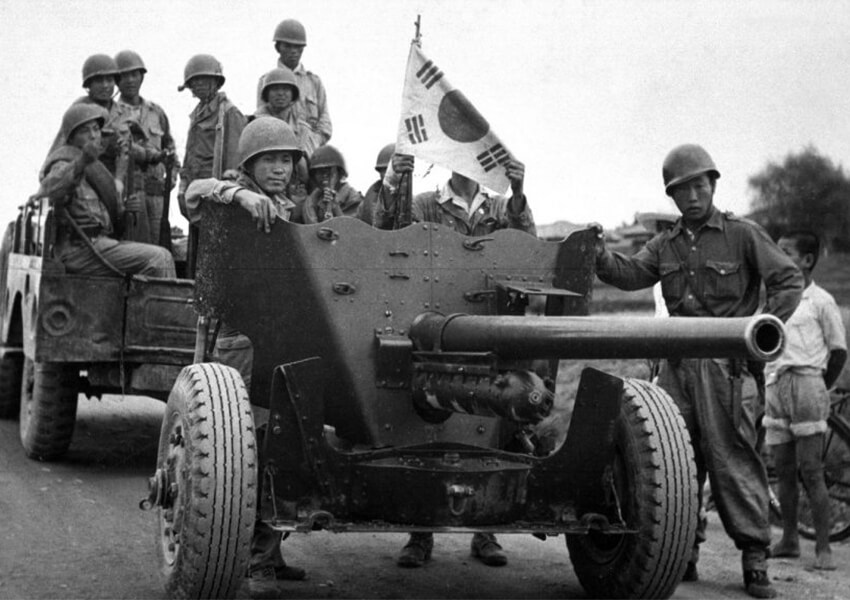
The war began on Sunday morning, June 25, 1950, after the North Korean People’s Army (NKPA) crossed the thirty-eighth parallel, supported by Soviet-made T-34 tanks. The attack was unexpected both in time and intensity.

Meanwhile, the Republic of Korea (South) Forces that have not been adequately trained or have the weaponry to meet these challenges choose to retreat. The NKPA moved quickly, took over the Korean capital in Seoul, and then crossed the Han River and went west to the Kum River, then south towards Taejon and Taegu. North Korea, under the auspices of the Soviet Union, wanted to make all of Korea a communist regime.

US President Harry S. Truman ordered US ground and air forces to evacuate residents. He also ordered the US Seventh Fleet to go to the Taiwan Strait to prevent a confrontation between the Communists and Chinese Nationalists.

Within two days, the United Nations adopted a resolution proposed by the United States, which called on the Democratic People’s Republic of Korea to withdraw.

Despite being called for withdrawal, the North Korean People’s Army actually moved further south. Truman, anxious about North Korea’s power, authorized General Douglas MacArthur to send ground troops. Despite the presence of American troops, North Korean forces continued to move south.

The 24th Infantry Division, led by General William Dean, was the first to react to hamper the North Korean army. This division was then assisted by the Fifth Air Force which was transferred to Korea, although in the end it still could not stop the power of the NKPA.

At the end of July 1950, the United Nations took a position along Naktong’s Perimeter to consolidate its forces consisting of: First American Cavalry Division, Second Infantry Division, 24th Infantry Division, 25th Infantry Division, and First Marine Brigade, and five South Korean infantry divisions.

Immediately after calls from the United Nations, member countries began sending troops and supplies. Britain was the first country to respond, placing their ships in Japanese waters under the command of the United Nations. Most countries cannot send large numbers of troops, but 17 countries have managed to provide at least financial strength to the United Nations Command.

Battle at Inchon and Yalu
On September 15, 1950, after increasing troops and building supply lines, General MacArthur began planning a plan he had considered from the start. The operation was called Operation Chromite, which was the landing of an amphibious force on the west coast port of Inchon.

In preparation, he formed the X Corps under the command of General Edward (Ned) Almond. The force consisted of the Seventh Infantry Division (Army) and the First Marine Division. The X Corps moves around the southern tip of Korea. The amphibious troops then landed on the morning of September 15, 1950 and within a few days had mastered Inchon and Kimpo Field. In October, Seoul was successfully regained and returned to President Syngman Rhee.

Meanwhile, the Eighth Army under Lieutenant General Walton H. Walker was out of bounds and moved north quickly. They cut off the supply and communication lines, so the NKPA was forced to withdraw. The two successes of the operation made the UN forces master the thirty-eight parallel in early October. In many ways war may end at this time.

However, the favorable situation was considered the right time for the United States to occupy all of Korea and return it as a unitary state. After obtaining permission from the Joint Chiefs of Staff and the United Nations, UN forces and the Republic of Korea crossed the thirty-eight parallel and moved north.

Meanwhile the Eighth Army headed towards the west side of the mountain, and the X Corps which had been moved by sea to Wonsan port, moved to the east side. Communication between the two forces is difficult. On Thanksgiving, the 17th Infantry Regiment in the US reached the Yalu River. It was at this point that the counterattack from South Korea and its supporters began.

Chinese Joining in War
The People’s Republic of China has warned that if UN forces cross the thirty-eighth parallel, they will enter the war. But General MacArthur assured President Harry S. Truman that the threat would not occur.

In mid-October 1950, there were clashes with Chinese soldiers. Then, on November 23, nearly 200,000 Chinese troops attacked. They have passed the frozen Yalu River and gathered strength during November. The United Nations Command was hit by a heavy blow from China, so Walker began to withdraw and evacuate troops by sea as much as possible.

To the east, the X Corps also suffered defeat. Soldiers and Marine personnel were pulled out under great pressure from the Chinese attack and the weather dropped almost 40 degrees below zero Fahrenheit. When soldiers and marines retreated to the port of Hungnam, the navy began to evacuate on Christmas Eve.

Nearly 100,000 UN and Republic of Korea soldiers, and most of the refugees were evacuated. On December 25, the port was destroyed, and most UN forces headed for Pusan ​​and other ports along the coast. Seoul was once again abandoned on January 3, 1951.

From then until the end of the war, China played a dominant role, not only in the procurement of military and civilian equipment and equipment, but also in the direction of strategy. Although North Korean soldiers continue to play an important role, both military authorities and civilian historians identify this Chinese attack marked a new phase of conflict. In addition, China will also play a leading role in negotiations which began in 1952.

War in the Hills and the Beginning of a Long Debate
General Walton Walker died in a jeep accident towards the end of December 1950. His successor, General Matthew B. Ridgway, arrived on Christmas Day and began the process of rebuilding the Eighth Army whose morale was destroyed after losing.

The effort was successful, Seoul was reconquered and on March 27, 1951. The Eighth Army continued to move until it reached the thirty-eighth parallel. In Operation Rugged, Ridgway’s forces established the Lines of Wyoming and Kansas, which would be the main path of resistance for the whole war.

In early 1952, most territorial rights were decided, and in early November 1952 the United Nations Command adopted a defensive policy and began to invite the communists to negotiate.

During this time there were no large-scale military operations, but the war focused on hills, outposts, and small bunkers. This is because the number of troops and supplies is decreasing on both sides. Soldiers and machines are limited by the scope of tasks, such as destroying a fortress, dismantling a bunker or disrupting a supply line.

The fighting was limited to the hills, and the units involved were often no more than one company of troops. Success or failure at the conference table is reflected in the success or failure in the field. Peace negotiations continued, as the fighting in the hills continued fiercely.

The United Nations and communist countries enter negotiations with far different concepts and desires. In addition, problems arose around prisoners of war between the two parties. The negotiation process went very slow and frustrated, the talks were stopped many times, and consequently more reflected the political atmosphere than the military.

End of the Korean War: Weapons

Shortly after Joseph Stalin’s death on March 5, 1953, the communists returned to the negotiating table and approved the exchange of prisoners. Changing the international environment was reflected in the various peace proposals offered. But the ceasefire depends on the agreement on the exchange of prisoners of war …

Whatever affects the achievement of the final agreement is difficult to ascertain. Certainly included Joseph Stalin’s death and Soviet domestic problems. The ceasefire was signed by General William K. Harrison and General Mark Clark for the United Nations, Marshal Peng The-huai for the Republic of China, and Marshall Kim Il Sung and Nam Il General for North Korea. The Republic of Korea did not sign the agreement.

Despite having reached a truce, there are still large numbers of North Korean residents and a much smaller number of South Koreans refuse to be repatriated. Thus creating new disputes in the future between the two Koreas.

The Korean War brought enormous losses to both parties. At least 33,741 US troops were killed in military action, 2,827 were killed in situations related to war, and 103,284 were injured. While the death toll for the Republic of South Korea alone reached 59,000 dead and 290,000 troops were injured, plus enough civilian casualties to bring the toll to nearly three million people.

More victims were on the side of North Korea and China, at least 500,000 troops were killed and one million were injured.

For material losses, South Korea is the most disadvantaged. Some villages disappeared as a result of the war and Seoul, the capital of the country, were mostly flat. Railroad lines, communications, overall state infrastructure, hydroelectric power plants, factories, civil buildings, even livestock and rice fields were destroyed.

BIBLIOGRAPHY

Ackermann, Marsha E (ed). 2008. Encyclopedia Of World History: The Contemporary World 1950 to the Present. New Yorl: Facts on File.

Edwards, Paul M. 2010. Historical Dictionary of the Korean War: Second Edition. Maryland: The Scarecrow Press.

Sorry, Carter. 2001. The Korean War 1950-1953. Oxford: Osprey Publishing.

Newark, Tim. 2001. Turning Tide of War: 50 Battles that Changed the Course of Modern History. London: Octopus Publishing.

Stueck, William. 1995. The Korean War. New Jersey: Princeton University Press.

Middle East Conflict: Iraq and Iran War

You know, Squad, back in 1980, there was a war between the State of Iraq and Iran. This Middle East conflict was known as the Gulf War I. Then, this war occurred around 8 years ago, starting from 1980 to 1988. If there was a war, there must be a cause. Well, in this article we will discuss briefly about the background and how the Middle East conflict involved Iraq and Iran occurred. Come see carefully.

A. Background to the Gulf War I

There are several factors that led to the occurrence of the Gulf War I, where there was a war between Iraq and Iran. The following are some of the factors:

The desire of Iraq and Iran to control Shatt Al Arab. Shatt Al Arab is a strategic perariran route that separates Iraq-Iran to the Persian Gulf. As long as these waters are built by large ports, this area is an oil export route so that it becomes a disputed area.
Given the desire of Iraq and Iran to become rulers of the Gulf, this has been done since Britain ended its military involvement in the Gulf in 1971.
Saddam Hussein, the President of Iraq, is a Sunni Muslim who is worried about the existence of a Shia rebellion in Iraq. This revolt was inspired by the Iranian revolution under the leadership of Ayatulloh Khomeini.
The weakening of Iran’s power after the 1979 revolution. Saddam Hussein was convinced that the situation in Iraq was unstable after the revolution because of the execution of pro-war officers against Shah Reza Pahlevi. This can benefit Iraq’s invasion.
If we look at the above factors, the war between Iraq and Iran is caused by the existence of the same interests and desires to control the region. It was the struggle for the area which then triggered a war between the two.

B. The course of the Gulf War I

The onset of tension between the two countries was in April 1980. At that time, the International Economic Conference held by Asian student unions in Iraq was taking place. Suddenly, a bomb exploded and certainly thwarted the event.

Because of this incident, Iraq considered that Iran was challenging to fight. Lapse of 5 months later, precisely on September 4, 1980, Iran suddenly launched an attack on several areas of Iraq, such as the villages of Khanaqin, Muzayriah, Zurbatiyah, Qata Mandali and Mustapha and Neft Khaneh oil installations. As a result of this attack, dozens of Iraqis were victims.

Then Iraq did not remain silent. Less than a month later, on September 22, 1980 Iraq began a counter-attack. Iraq began destroying heavy weapons centers and also the Mehrabad airport, Tehran, Iran.

Iraq succeeded in occupying the islands of Tumb Besar and Tumb Kecil (the territorial disputes between the two countries) which had been controlled by Iran for hundreds of years. This attack was later considered an Iraqi victory. However, Iran did not remain silent, Iran returned to counterattack to the Basra and Wasit regions.

This war continues, the action against each other is inevitable. Until finally in April 1983, Iraq destroyed an oil well in Norwuz which had a major impact even to neighboring countries. The impact is very bad. Water resources around the Gulf region are polluted by oil. This makes the price of drinking water in this region very expensive. In fact, the price of one liter of water at that time is almost five times the price of the OPEC crude oil standard.

Some of the affected countries are Qatar, Kuwait and Bahrain. This war continued until the eighth year.

C. End of Gulf War I

The war that happened for 8 years turned out to be fruitless, Squad. In this bay war I have neither won nor lost. Until finally this war ended after Iran agreed to accept UN Security Council Resolution No. 598 of 1988. At the resolution, Iran was asked to carry out a ceasefire and the enforcement of the Algier Agreement which had been compiled since 1981.

Now that’s the historical Squad of the Middle East conflict. In this article just described in the Gulf War I, there are still several other wars in the Middle East. This war between Iraq and Iran took a lot of casualties, even almost as many as victims of World War II.

SOCRATES AND THEIR THOUGHT

Philosophy is the view of life of a person or group of people which is a basic concept of life that is aspired. Philosophy is also interpreted as an attitude of someone who is aware and thinking adult in everything in depth and wants to see in terms of a broad and comprehensive with all relationships. The development of philosophy starts from the days of ancient philosophy to modern philosophy. Various new thoughts emerge and together seek the truth to reach a true truth.

With the existence of philosophy, figures emerged who made changes with various thoughts. These thoughts make people use their minds to think more deeply and explore knowledge that is very useful today. Various new discoveries have been obtained so that it makes someone wiser in dealing with an existing problem.

In this paper, the author will discuss the figure of the Athenian philosopher who has a lot of influence in the history of Ancient Greek philosophy. He is Socrates, in this paper the author will try to describe the various highly controversial Socrates’ thoughts of his day and glance at the life journey of the famous Socrates with his good and simple personality.

A. SOCRATES BIOGRAPHY
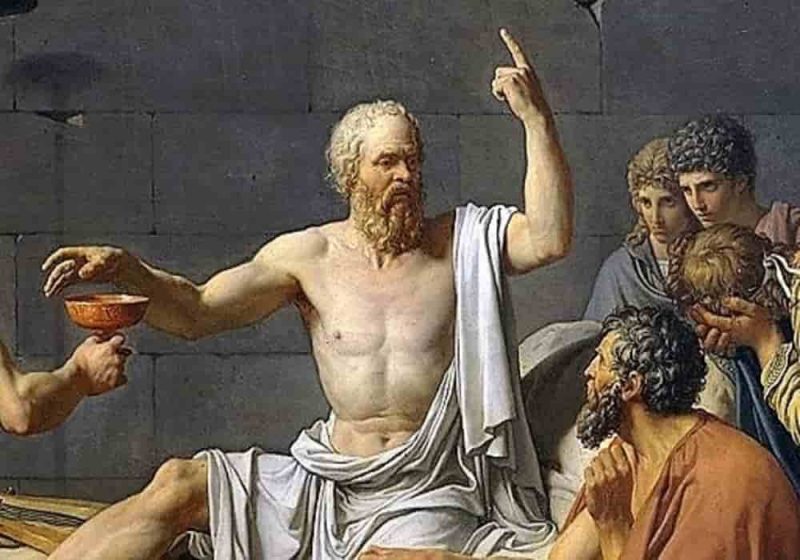
Socrates (470 BC – 399 BC) was a philosopher from Athens, Greece and was one of the most important figures in the Western philosophical tradition. Socrates was born in Athens, June 4, 470 BC, and was the first generation of three great philosophers in Greece, namely Socrates, Plato and Aristotle. Plato and Aristotle were Socrates students. Socrates’ father was a stone mason named Sophroniscos. His mother was a midwife named Phainarete, from which Socrates named his method of philosophizing with the midwifery method. Socrates married a woman named Xantippe and was blessed with three children, Ramprocles, Sophroniscos and Menexene. Socrates is an enigmatic figure in the history of philosophical development. He never wrote a line in a writing.

The lifetime of Socrates was contemporary with the sophists. He is known as a person who is virtuous, honest and fair. How to convey his thoughts to the youth he used the question and answer method. Therefore he gained a lot of sympathy from the youth in his country. But he was also disliked by many by accusing him of being a person who ruined the morale of his country’s youth. In addition, he was also accused of rejecting gods or gods that had been recognized by the state.

The continuation of the accusations against him made him tried by the Athens court. In the court process he said that his defense was later written by Plato in his text entitled Apology. Plato told of the accusation. Allegations say that Socrates did not only oppose the religion recognized by the State, but also taught his own new religion. One of the men who charged him, Melithus, said that he was a godless person and added: Socrates said the sun was a rock and the moon was land. Socrates of course said that the new accusations that said he was atheist were contrary to the previous charges, and then he presented a broader range of views.

The Book of Apology gives a clear picture of a particular human figure: a man who is very confident, big-spirited, does not care about worldly preferences, namely that he is guided by a divine voice, and is convinced that clear reasoning is the most important condition for living properly. In Apology, Socrates defends himself not for his own sake, but for the sake of the judges. According to him, the judges were community mosquitoes, sent gods to the country, and it was not easy to find other people like him (Socrates). Socrates answered (denied) the accusation, and asked him who was the one who was improving the youth. Melithus answered at first the judges, then pressed a little to say that all the people of Athens except Socrates improved the youth. Socrates congratulated that Athens had the good fortune to have so many people who tried to improve youth, and good people would certainly be more appropriate to be associated with than bad people, so he would not be able to be so stupid as to intentionally damage them. After the decision was read, he was denied an alternative sentence of thirty minae (for which Socrates named Plato as one who could afford it, and was present at the hearing), and Socrates delivered his final speech about death. He said that death is not the end of everything, death is a separate body from the soul to proceed to the next world. In the court process Socrates was found guilty of voting 280 against 220 (Bertens, 1975: 82). He was charged with the death sentence. Socrates was sentenced to death by drinking poison, some said poisons from cypress plants, which were clearly poison from plants.

The method of death also gives an example, how a philosopher is loyal to his teachings and still holds firmly in his belief even though life is at stake. Socrates has died, but his name and thoughts are forever alive. Socrates was a mediocre person, everyone agreed that Socrates’s face was very bad, his nose was thick and his stomach was so fat; he was “worse than the Silenus in the Satirical drama” (Xenopon, Symposium). He always wears dirty and old clothes, wherever he goes always barefoot. His attitude that doesn’t care about heat and cold, hunger and thirst amazes everyone. In the Symposium, Alkibiades, which tells Socrates when he was on military duty that he was more responsible than other friends. When he was cut off in supplies and was forced to leave without food, he remained strong compared to the others. At that time the weather was freezing, ignoring the cold he still strode with certainty on the ice pile that was petrified in his usual manner, shabby and barefoot. The ability to control all physical passions is constantly highlighted. He rarely drank wine, but while he wanted to, he had a stronger drink than everyone.

B. SOCRATES THINKING
The sophists live in the same age as Socrates, and indeed there are similarities in opinion between the two. According to Cicero, Socrates moved philosophy from heaven to earth, meaning that the targets investigated were no longer the universe, but humans. But not only did Socrates make this, the sophists too. They also make humans the target of their thoughts. That is why Aristophanes called Socrates a sophist. Even so there is a big difference between Socrates and the sophists. Socrates’ philosophy is a reaction and a criticism of the sophists. The term “sofis” experiences its own development. Before the 5th century the term meant: scholar, scholar. In the 4th century scholars or scholars were no longer called “sofis”, but “philosophical”, philosophers, while the term “sophists” was applied to teachers who traveled from city to city to teach. Finally the term “sophist” is no longer fragrant, because a sophist is a person who deceives other people by using illegitimate reasons. The teachers around were accused of being people who asked for money for their teachings.

The teaching that all truths have relatively shaken established scientific theories, shook religious beliefs. This causes confusion and chaos in life. This is why Socrates rose. He must convince the Athenians that not all truths are relative, there are general truths that can be held by everyone. Some truths are relative, but not all of them. Unfortunately, Socrates did not leave the writing. The sophists assume that all knowledge is the relative truth, there is no general knowledge. By that definition Socrates can prove to the sophists that general knowledge exists, namely the definition itself. So, the sophists are not entirely right, the truth is that some knowledge is general and some is special, the particular is knowledge with relative truth. As the following example: what is a chair? People can check all the seats, if possible all the seats in this world. For example the judge’s chair consists of a seat and backrest, four-legged, from teak wood. Second, the recliner consists of seating, sandara and four-legged, made of stainless steel, and so on. So it can be concluded that every seat is always a seat and a backrest. These two features are found in all seats. Whereas the other features do not belong to all seats. So, everyone will agree that the chair is a leaning seat. This example is objective truth – general, not subjective – relative. About the number of feet, material, size, etc. It is a relative truth. So, indeed there is general knowledge, that’s the definition.

The teachings can be obtained from the writings of his students, especially Plato. Bartens explained that Socrates’s teachings were intended to oppose the teachings of sophistical relativism. He wants to uphold science and religion. The way socrates gave his teachings was that he came to people with various backgrounds, such as: political experts, officials, craftsmen and others. The method is practical and is carried out through conversations. He analyzes opinions. Everyone has opinions about wrong and wrong, fair and unfair, brave and cowardly, etc. Socrates always responds to the first answer as a hypothesis and with further answers and draws consequences that can be deduced from these answers. If it turns out that the first hypothesis cannot be maintained, because it produces impossible consequences, then the hypothesis is replaced with another hypothesis, then this second hypothesis is investigated with other answers, and so on. Often the conversation ends with aporia (confusion). However, it is not uncommon for dialogue to produce a definition that is considered useful. The method commonly used by Socrates is usually called dialectics. According to Plato, dialectics in the sense as a method to explore knowledge by way of question and answer, not discovered by Socrates. Presumably this method was first practiced systematically by Zeno, a student of Parmenindes; in Plato’s dialogue entitled Parmenindes, Zeno outperformed Socrates in the same way as what happened in Plato’s other dialogues where Socrates outperformed others. But there is enough reason to suppose that Socrates practiced and developed this method at the same time. The Socrates method is called the dialectic because dialogue has an important role in it. Another name is Maieutics, midwifery, because this way Socrates acts like a midwife who helps the birth of a baby “the right understanding”.

With this way of working, Socrates found a way of thinking called induction, namely: concluding knowledge that is general in nature with the origin of a lot of knowledge about special things. For example: many people consider their expertise (blacksmiths, shoemakers, sculptors, etc.) as their virtues. A blacksmith argues that his virtue is if he makes good iron tools. A shoemaker considers his superiority, if he makes good shoes. And so on. To know what “virtue” in general, all the special characteristics of the various virtues must be removed. Stay the general virtues. Thus with induction it is also found what is called the general definition. This general definition at that time was unknown. Socrates was the one who discovered it, which turned out to be very important for science. For Socrates the general definition is not first needed for scientific purposes, but for ethics. What is needed is ethical understanding, such as: justice, truth, friendship and others.

Socrates also said that the human soul is not merely his breath, but the principle of human life in a deeper sense. The soul is the essence of man, the essence of man as a responsible person. Because the soul is the essence of man, then humans must give priority to the soul’s happiness (eudaimonia = having a daimon or good soul), more than body happiness or outward happiness, such as: health and wealth. Humans must make their souls become the best souls possible. If it is only life, it has no meaning. Socrates’ famous establishment is “Virtue is Knowledge”. The virtue in the field of good life certainly makes people able to live well. Living well means practicing his knowledge of good life. So good and evil are associated with the question of knowledge, not with human will.

In the last part of Socrates’ life, where he expressed his views on what happened after death, he was truly convinced of immortality. As in the footage of Socrates’s closing speech after he was sentenced to death:

“And now O people who have punished me, I want to predict your destiny; for I will soon die, and moments before the death of man are endowed with predictability. And I predict, my assassins, that shortly after my departure, a sentence which is far more severe than what you impose on me will surely await you … if you think that killing someone you can tackle that person so that you do not criticize your despicable life ; it is not an honorable and liberating way out; the easiest and most dignified way is not to suppress others, but by improving yourself. Death may be the same as sleeping without dreams – which are clearly good – or perhaps the soul’s move to another world. And is there anything that burdens humans if he is given the opportunity to talk to Orpheus, Musaeus, Hesiodus, and Homer? So, if this is true, let me die repeatedly. In the other world they will not punish someone for just asking: of course not. Because unless it’s happier than we are now, those in the other world are eternal, if what is often told is true … “

From the description of the closing remarks above, Socrates has believed that there is life after death, and death is the transfer of the human soul to the next world. Dead people only leave bodies. Socrates argues that the spirit existed before humans, in circumstances that we do not know. Even though the spirit has been laced with the human body, but when the human died, the spirit returned to all its origin. When people say to Socrates, the king intends to kill him. He replied: “Socrates is in a jug, the king can only break the jug. The jug broke, but the water will return to the sea. ” That is, the broken body is the body, while the soul is eternal.

COVER

Socrates was an ancient Greek philosopher born in Athens in 470 BC who was the most important figure in the western philosophical state. He is a simple person, who is always dressed in old and dirty and never wears footwear. He is a good, honest and fair person. Socrates’ father was a sculptor and Socrates’s mother was a midwife who later with her mother’s work she got inspiration from the thoughts of a midwife. Pre-Socratic Philosophy only deals with natural objects, while Socrates in addition to discussing nature also addresses humans, souls, and others.

From these things arises thoughts that are very useful today. The thoughts are as follows:

Thought about the existence of general truth, because Socrates thinks that not all truths are relative or also called induction thinking, which concludes knowledge that is general in nature with the origin of a lot of knowledge about special things.
The dialectical method, which was actually applied by a philosopher named Zeno who was a student of Parmenindes. Nevertheless, Socrates was the one who developed this method. The way it works is like the name of the method, namely by asking questions or having a dialogue. This method is also called Maieutics or midwifery.
The idea of ​​”virtue is knowledge” so everything is related to existing knowledge. Even Socrates has explained that good and evil in human life are associated with knowledge, not with human will.
Thought about the existence of immortal humans or immortality. Socrates argues that people who die only leave bodies, and their souls will go to the next world.