7 Powerful Tips for Caring for Children’s Teeth

The habit of caring for healthy teeth must be done as early as possible. Even though it’s still in the form of milk teeth, don’t let your little teeth become hollow or porous. Caring for baby teeth does have its own challenges Moms, because e-mail on milk teeth is weaker than e-mail on adult teeth.

The seven tips below will help Moms to care for milk teeth Little one, let’s see!

1. Drinking water

Make sure your child drinks lots of water after eating. By drinking enough water, dental problems can be avoided. Drinking water is one way to reduce infection in the teeth after eating.

2. Caring for Gums

Take care of dental health early even before the milk teeth grow. You can clean your toddler’s gums. Use a soft, damp cloth to scrub the gums slowly.

3. Routine Brushing Teeth

Moms, get used to the Little One to always brush their teeth at least twice a day. Brush your teeth for at least two minutes. This habit can be done when the morning before night sleeps.

4. Use a Brush and Toothpaste

When the milk teeth begin to appear, use a toothbrush to clean them. Start using a little toothpaste, about the size of a grain of rice.

5. Accompany your child to brush his teeth

Always accompany your child when brushing his teeth, to determine whether he has done it right or not. It’s best if you brush your teeth until you can brush your teeth, which is around the age of six.

6. Keep eating intake

You can introduce your Little One with healthy food early so that your milk teeth and permanent teeth will be maintained. Avoid foods that contain lots of sugar. If you want to give sweet food, give it gradually. Train your child to chew so well that he is not used to eating food in his mouth.

7. Check Dental Routine

You can start your baby’s routine dental check-up after the first tooth when he is still a baby, or at the latest when the little one is one year old. Little risk for tooth decay will be greater if the family or parents have a history of certain dental diseases.

5 Ways to Care for Cavities

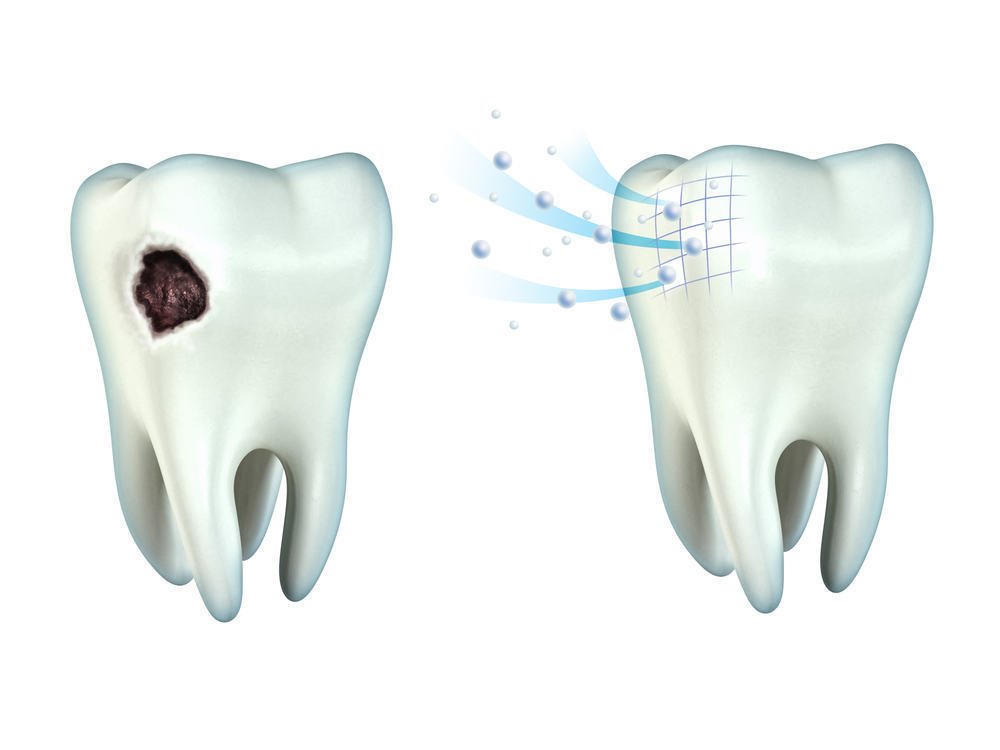
Cavities are conditions that indicate damage to tooth enamel, aka the hard outer layer of the teeth. This condition can be a problem in children, adolescents, and adults. The bacterial layer that attaches to the teeth, or the so-called plaque, will continue to form on your teeth. When you eat or drink something that contains sugar, the bacteria in the plaque will produce acids that attack the enamel of the teeth. Plaque sticking will make these acids continue to come into contact with your teeth, and at any time the tooth enamel will break and produce holes in the teeth.

5 Ways to Care for Cavities

Cases of cavities are more commonly known among children, but tooth changes that occur due to aging can make cavities also become an adult problem.

Causes of cavities
According to Dr. Edward Mellanby, Dr. Weston Price, and Dr. Ragel Ramiel, there are 4 main factors that can cause tooth decay, namely:

Lack of minerals in diet (lack of calcium, magnesium deficiency and phosphorus deficiency)
Lack of fat soluble vitamins such as vitamins A, D, E, and K (especially vitamin D)
Too much food is rich in phytic acid
Consume too much processed sugar
How to treat cavities

1. Take lots of vitamin D
Vitamin D is important for building strong teeth and bones, because it is a major factor in healing cavities. Vitamin D can also help prevent gum inflammation because it is anti-inflammatory.

Calcium flows in and out of your teeth to the parts of the body that need it, and vitamin D regulates this process. When we lack vitamin D, your teeth won’t get calcium, and what’s worse, calcium in your teeth will be taken by other body parts. When this continues, you will develop periodontal disease and weakened teeth.

Vitamin D is also responsible for creating cementum that binds teeth to the bones in your mouth. The gene that controls periodontal disease is regulated by vitamin D-controlled receptors.

We can get Vitamin D with morning sunlight, cod liver fermentation oil, vitamin D supplements, tuna, fortified milk, egg yolks, and beef liver.

2. Take lots of vitamins K1 and K2
Dr. Weston Price calls vitamin k “X-Factor”. His research describes the case history of a 14-year-old girl who has 48 cavities. The girl consumed vitamin K extract, high-vitamin butter oil, and cod liver fermentation oil three times a day for 7 months. The result is tooth decay and mineralized teeth (48 cavities are cured and 24 teeth have new tooth enamel).

Studies show that vitamin K can utilize special proteins that have the ability to distribute calcium and phosphorus to teeth and bones. Dr. Price found that calcium and phosphorus imbalances would cause a number of diseases in the body, such as cavities and dental infections.

We can get vitamin K from kale, spinach, mustard greens, collard green, green beets, green radishes, paterseli, broccoli, cabbage, beef, eggs, cheese, butter, cod liver oil fermentation and vitamin K supplements.

3. Avoid foods that cause cavities
Avoid foods that can cause tooth decay, such as:

Sugar and carbohydrates. Both can make changes in blood sugar which results in the closure of mineral flow in the teeth.
Phytic acid. A mineral blocker and enzyme blocker that can cause serious health problems. Phytic acid can be found in grains and peanuts.
Processed vegetable oil. When heated, free radicals created by heat will become very toxic. Processed vegetable oil which is dangerous if heated is corn oil, cottonseed oil, and soybean oil.
Fast food. Glycerin contained in it can inhibit calcium in mineralizing your teeth.
4. Drink alkaline (alkaline) water
Many young children experience decaying teeth at an early age. Those who grew up drinking acidic water, even if only slightly, would suffer tooth loss at an alarming rate.

Alkaline water has a pH of 8 or more. By consuming alkaline drinking water, you can neutralize the acid in the mouth which makes the cavities worse. Alkaline water can also support strong teeth and bone growth.

5. Try oil pulling therapy
This therapy has been used for centuries by Ayurveda medicine. Oil pulling is a very popular detoxification procedure. This therapy is done by gargling using one spoon of oil for 20 minutes. This simple detox procedure has been trusted to cure dental problems, headaches, and diabetes.


5 Steps to Effective Dental Care Avoid Cavities

Lazy to maintain dental health and do dental treatment, can cause cavities. If this is the case, over time toothache can occur, and eating feels bad.


5 Steps to Effective Dental Care Avoid Cavities

Teeth are one of the important organs in the human body that function to cut and destroy food, so that it is easily swallowed well. Perforated teeth can interfere with pleasure while eating. Therefore, you need to take several steps to routine dental care to avoid cavities.

How to Take Care of Teeth
Here are five easy steps for dental care that you can do to maintain healthy teeth to avoid cavities:

Brush your teeth after eating
Maybe you often hear that brushing your teeth should be done twice a day, which is when you wake up and before going to bed. But actually, to prevent cavities, it is recommended to brush your teeth at least every time you eat, and don’t forget to clean your teeth with dental floss. However, if you cannot brush your teeth after each meal, at least gargle with water to remove leftover food in your mouth.

Clean teeth with gargling
In addition to brushing your teeth, rinse your mouth with liquid cleaning solution. Gargling is powerful enough to remove plaque and bacteria from the mouth. Gargling is no less important than brushing teeth.
Plaque produces acid that causes cavities, which if left unchecked can also interfere with the gums. Finally, not only is the tooth problematic, but also your gums. By gargling, the part of the mouth that is not reached by a toothbrush can be cleaned.

Use toothpaste containing fluoride
Your teeth need protection in the tooth enamel. Enamel itself is the outermost layer of the tooth. Fluoride will protect your teeth from acidic compounds that can cause tooth decay, by preventing bacteria on the plaque from producing acid. Fluoride can also help improve the enamel layer to strengthen tooth protection.
However, for children, it is advisable to consult a dentist first, to find out the safe limits of using toothpaste containing fluoride in children. Because if it’s excessive, fluoride is also not good for your child’s dental health.

Avoid foods that cause cavities
Doing a few steps of dental care above is not enough if you do not avoid foods that cause cavities. For example, sweet foods and foods that can stick to the gaps of your teeth (eg candy, cakes, chocolate, and chips). When you consume sweet foods or drinks, the bacteria in your mouth will produce acids that can damage your tooth’s enamel.
In addition to avoiding foods that trigger cavities, consume foods that are good for dental health, such as vegetables, fruit, milk, cheese, and water. You can also replace your favorite candy with gum that can help clean up the remaining food particles from the mouth.

Check your dental and oral health regularly with your doctor
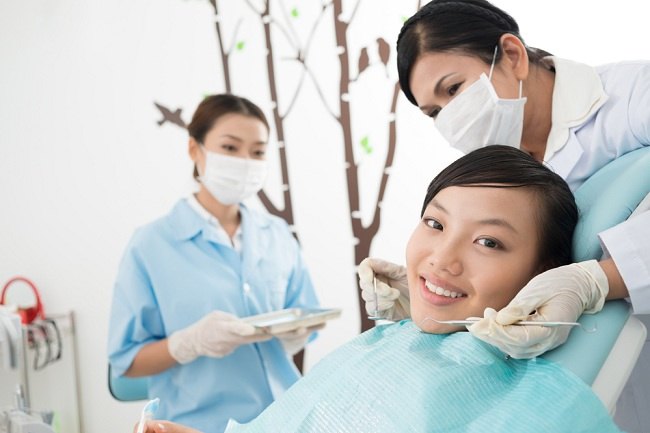
Doing a routine dental check can be one way to avoid cavities and is a good step of dental care. With routine dental examinations, dental problems can be detected early so they are easier to handle. If the examination found that the teeth are prone to holes, the doctor will provide more protection to the teeth in the form of sealants. Sealants are protective gear jackets that function to protect tooth enamel from acids and plaques that can cause tooth decay.
Doing dental treatment does not have to wait until the teeth are damaged, or to interfere with the pleasure of eating. Begin to maintain your teeth and mouth health by routinely doing dental care above. In addition, avoid foods that can damage teeth, because it can not only interfere with your dental health, but can also interfere with your body’s health.