Korean War (1950-1953 AD)

The Korean War was the first major conflict that occurred during the Cold War. This conflict between North and South Korea took place between June 1950 and July 27, 1953. The war, known as the forgotten war, claimed millions of lives. All of Korea has terrible destruction and takes decades to recover.
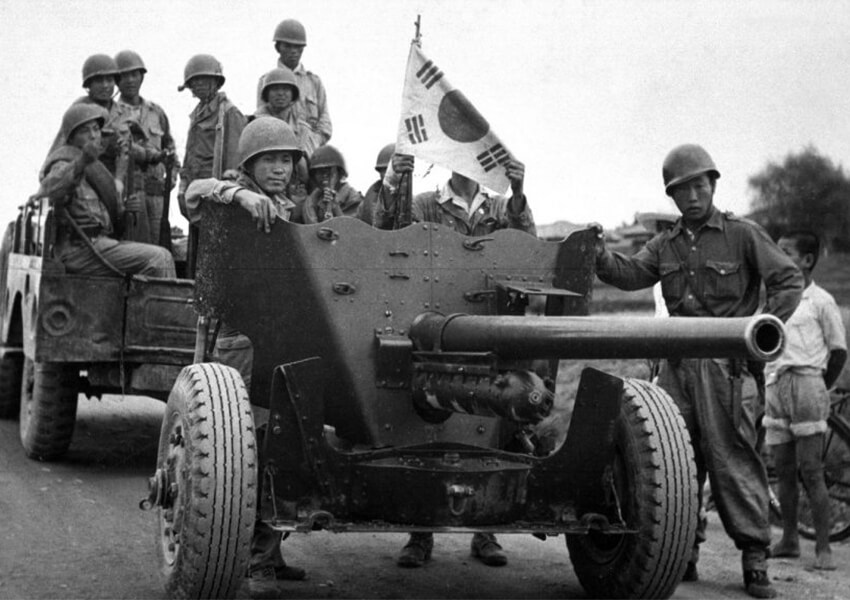
Historical Background of the Korean War

Korea is a region that is not too large, because it only occupies an area of 85,246 square miles. The Korean region is more an archipelago, with a coastline of 5,400 miles and is strongly influenced by the sea.

Before 1945, Korea was a unit. The ancient Korean Empire was united by the Tang Dynasty in 668 AD. This united Korea survived for 1300 years before finally breaking out.

Korea broke into two parts after the maneuvers carried out by the Allies towards the end of World War II. During the war, Korea was an area controlled by Japan. However, after Japan’s defeat in World War II, Korea was divided into two parts in the 38th parallel. The Soviets occupied North Korea, while the United States occupied the south.

After Korea was separated, the two superpower countries instilled their influence on the Korean mainland. With the intensification of the World War between the Soviets and the United States, the dividing line between North and South Korea became the new iron curtain that separated Koreans from each other. Although separated, the two parts of the region became an arena for the power of the Soviet Union and the United States. Thus, conflicts between the two are very likely to occur.

North Korean leader Kim II Sung is very ambitious to unite Korea. Therefore, he requested the support of Soviet leader Joseph Stalin in April 1950. Stalin finally agreed to support the North Korean invasion of South Korea. He only asked Kim to ensure that the victory could be achieved and the Soviets would not intervene directly.

After obtaining Stalin’s support, Kim then visited the leader of the Chinese Communist Party, Mao Zedong in Beijing. Mao agreed that only military power could unite Korea. He also doubted the United States would pay attention to the war in Korea.

While Kim confidently told Mao that his army would take control of all of Korea within three weeks, long before American intervention might occur.

The start of the Korean War

The war began on Sunday morning, June 25, 1950, after the North Korean People’s Army (NKPA) crossed the thirty-eighth parallel, supported by Soviet-made T-34 tanks. The attack was unexpected both in time and intensity.

Meanwhile, the Republic of Korea (South) Forces that have not been adequately trained or have the weaponry to meet these challenges choose to retreat. The NKPA moved quickly, took over the Korean capital in Seoul, and then crossed the Han River and went west to the Kum River, then south towards Taejon and Taegu. North Korea, under the auspices of the Soviet Union, wanted to make all of Korea a communist regime.

US President Harry S. Truman ordered US ground and air forces to evacuate residents. He also ordered the US Seventh Fleet to go to the Taiwan Strait to prevent a confrontation between the Communists and Chinese Nationalists.

Within two days, the United Nations adopted a resolution proposed by the United States, which called on the Democratic People’s Republic of Korea to withdraw.

Despite being called for withdrawal, the North Korean People’s Army actually moved further south. Truman, anxious about North Korea’s power, authorized General Douglas MacArthur to send ground troops. Despite the presence of American troops, North Korean forces continued to move south.

The 24th Infantry Division, led by General William Dean, was the first to react to hamper the North Korean army. This division was then assisted by the Fifth Air Force which was transferred to Korea, although in the end it still could not stop the power of the NKPA.

At the end of July 1950, the United Nations took a position along Naktong’s Perimeter to consolidate its forces consisting of: First American Cavalry Division, Second Infantry Division, 24th Infantry Division, 25th Infantry Division, and First Marine Brigade, and five South Korean infantry divisions.

Immediately after calls from the United Nations, member countries began sending troops and supplies. Britain was the first country to respond, placing their ships in Japanese waters under the command of the United Nations. Most countries cannot send large numbers of troops, but 17 countries have managed to provide at least financial strength to the United Nations Command.

Battle at Inchon and Yalu
On September 15, 1950, after increasing troops and building supply lines, General MacArthur began planning a plan he had considered from the start. The operation was called Operation Chromite, which was the landing of an amphibious force on the west coast port of Inchon.

In preparation, he formed the X Corps under the command of General Edward (Ned) Almond. The force consisted of the Seventh Infantry Division (Army) and the First Marine Division. The X Corps moves around the southern tip of Korea. The amphibious troops then landed on the morning of September 15, 1950 and within a few days had mastered Inchon and Kimpo Field. In October, Seoul was successfully regained and returned to President Syngman Rhee.

Meanwhile, the Eighth Army under Lieutenant General Walton H. Walker was out of bounds and moved north quickly. They cut off the supply and communication lines, so the NKPA was forced to withdraw. The two successes of the operation made the UN forces master the thirty-eight parallel in early October. In many ways war may end at this time.

However, the favorable situation was considered the right time for the United States to occupy all of Korea and return it as a unitary state. After obtaining permission from the Joint Chiefs of Staff and the United Nations, UN forces and the Republic of Korea crossed the thirty-eight parallel and moved north.

Meanwhile the Eighth Army headed towards the west side of the mountain, and the X Corps which had been moved by sea to Wonsan port, moved to the east side. Communication between the two forces is difficult. On Thanksgiving, the 17th Infantry Regiment in the US reached the Yalu River. It was at this point that the counterattack from South Korea and its supporters began.

Chinese Joining in War
The People’s Republic of China has warned that if UN forces cross the thirty-eighth parallel, they will enter the war. But General MacArthur assured President Harry S. Truman that the threat would not occur.

In mid-October 1950, there were clashes with Chinese soldiers. Then, on November 23, nearly 200,000 Chinese troops attacked. They have passed the frozen Yalu River and gathered strength during November. The United Nations Command was hit by a heavy blow from China, so Walker began to withdraw and evacuate troops by sea as much as possible.

To the east, the X Corps also suffered defeat. Soldiers and Marine personnel were pulled out under great pressure from the Chinese attack and the weather dropped almost 40 degrees below zero Fahrenheit. When soldiers and marines retreated to the port of Hungnam, the navy began to evacuate on Christmas Eve.

Nearly 100,000 UN and Republic of Korea soldiers, and most of the refugees were evacuated. On December 25, the port was destroyed, and most UN forces headed for Pusan ​​and other ports along the coast. Seoul was once again abandoned on January 3, 1951.

From then until the end of the war, China played a dominant role, not only in the procurement of military and civilian equipment and equipment, but also in the direction of strategy. Although North Korean soldiers continue to play an important role, both military authorities and civilian historians identify this Chinese attack marked a new phase of conflict. In addition, China will also play a leading role in negotiations which began in 1952.

War in the Hills and the Beginning of a Long Debate
General Walton Walker died in a jeep accident towards the end of December 1950. His successor, General Matthew B. Ridgway, arrived on Christmas Day and began the process of rebuilding the Eighth Army whose morale was destroyed after losing.

The effort was successful, Seoul was reconquered and on March 27, 1951. The Eighth Army continued to move until it reached the thirty-eighth parallel. In Operation Rugged, Ridgway’s forces established the Lines of Wyoming and Kansas, which would be the main path of resistance for the whole war.

In early 1952, most territorial rights were decided, and in early November 1952 the United Nations Command adopted a defensive policy and began to invite the communists to negotiate.

During this time there were no large-scale military operations, but the war focused on hills, outposts, and small bunkers. This is because the number of troops and supplies is decreasing on both sides. Soldiers and machines are limited by the scope of tasks, such as destroying a fortress, dismantling a bunker or disrupting a supply line.

The fighting was limited to the hills, and the units involved were often no more than one company of troops. Success or failure at the conference table is reflected in the success or failure in the field. Peace negotiations continued, as the fighting in the hills continued fiercely.

The United Nations and communist countries enter negotiations with far different concepts and desires. In addition, problems arose around prisoners of war between the two parties. The negotiation process went very slow and frustrated, the talks were stopped many times, and consequently more reflected the political atmosphere than the military.

End of the Korean War: Weapons

Shortly after Joseph Stalin’s death on March 5, 1953, the communists returned to the negotiating table and approved the exchange of prisoners. Changing the international environment was reflected in the various peace proposals offered. But the ceasefire depends on the agreement on the exchange of prisoners of war …

Whatever affects the achievement of the final agreement is difficult to ascertain. Certainly included Joseph Stalin’s death and Soviet domestic problems. The ceasefire was signed by General William K. Harrison and General Mark Clark for the United Nations, Marshal Peng The-huai for the Republic of China, and Marshall Kim Il Sung and Nam Il General for North Korea. The Republic of Korea did not sign the agreement.

Despite having reached a truce, there are still large numbers of North Korean residents and a much smaller number of South Koreans refuse to be repatriated. Thus creating new disputes in the future between the two Koreas.

The Korean War brought enormous losses to both parties. At least 33,741 US troops were killed in military action, 2,827 were killed in situations related to war, and 103,284 were injured. While the death toll for the Republic of South Korea alone reached 59,000 dead and 290,000 troops were injured, plus enough civilian casualties to bring the toll to nearly three million people.

More victims were on the side of North Korea and China, at least 500,000 troops were killed and one million were injured.

For material losses, South Korea is the most disadvantaged. Some villages disappeared as a result of the war and Seoul, the capital of the country, were mostly flat. Railroad lines, communications, overall state infrastructure, hydroelectric power plants, factories, civil buildings, even livestock and rice fields were destroyed.

BIBLIOGRAPHY

Ackermann, Marsha E (ed). 2008. Encyclopedia Of World History: The Contemporary World 1950 to the Present. New Yorl: Facts on File.

Edwards, Paul M. 2010. Historical Dictionary of the Korean War: Second Edition. Maryland: The Scarecrow Press.

Sorry, Carter. 2001. The Korean War 1950-1953. Oxford: Osprey Publishing.

Newark, Tim. 2001. Turning Tide of War: 50 Battles that Changed the Course of Modern History. London: Octopus Publishing.

Stueck, William. 1995. The Korean War. New Jersey: Princeton University Press.
SOCRATES AND THEIR THOUGHT

Philosophy is the view of life of a person or group of people which is a basic concept of life that is aspired. Philosophy is also interpreted as an attitude of someone who is aware and thinking adult in everything in depth and wants to see in terms of a broad and comprehensive with all relationships. The development of philosophy starts from the days of ancient philosophy to modern philosophy. Various new thoughts emerge and together seek the truth to reach a true truth.

With the existence of philosophy, figures emerged who made changes with various thoughts. These thoughts make people use their minds to think more deeply and explore knowledge that is very useful today. Various new discoveries have been obtained so that it makes someone wiser in dealing with an existing problem.

In this paper, the author will discuss the figure of the Athenian philosopher who has a lot of influence in the history of Ancient Greek philosophy. He is Socrates, in this paper the author will try to describe the various highly controversial Socrates’ thoughts of his day and glance at the life journey of the famous Socrates with his good and simple personality.

A. SOCRATES BIOGRAPHY
Socrates (470 BC – 399 BC) was a philosopher from Athens, Greece and was one of the most important figures in the Western philosophical tradition. Socrates was born in Athens, June 4, 470 BC, and was the first generation of three great philosophers in Greece, namely Socrates, Plato and Aristotle. Plato and Aristotle were Socrates students. Socrates’ father was a stone mason named Sophroniscos. His mother was a midwife named Phainarete, from which Socrates named his method of philosophizing with the midwifery method. Socrates married a woman named Xantippe and was blessed with three children, Ramprocles, Sophroniscos and Menexene. Socrates is an enigmatic figure in the history of philosophical development. He never wrote a line in a writing.

The lifetime of Socrates was contemporary with the sophists. He is known as a person who is virtuous, honest and fair. How to convey his thoughts to the youth he used the question and answer method. Therefore he gained a lot of sympathy from the youth in his country. But he was also disliked by many by accusing him of being a person who ruined the morale of his country’s youth. In addition, he was also accused of rejecting gods or gods that had been recognized by the state.

The continuation of the accusations against him made him tried by the Athens court. In the court process he said that his defense was later written by Plato in his text entitled Apology. Plato told of the accusation. Allegations say that Socrates did not only oppose the religion recognized by the State, but also taught his own new religion. One of the men who charged him, Melithus, said that he was a godless person and added: Socrates said the sun was a rock and the moon was land. Socrates of course said that the new accusations that said he was atheist were contrary to the previous charges, and then he presented a broader range of views.

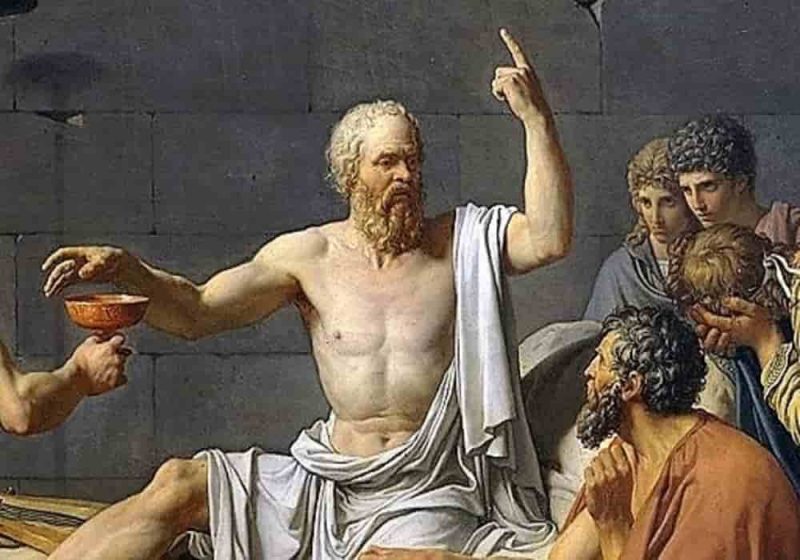
The Book of Apology gives a clear picture of a particular human figure: a man who is very confident, big-spirited, does not care about worldly preferences, namely that he is guided by a divine voice, and is convinced that clear reasoning is the most important condition for living properly. In Apology, Socrates defends himself not for his own sake, but for the sake of the judges. According to him, the judges were community mosquitoes, sent gods to the country, and it was not easy to find other people like him (Socrates). Socrates answered (denied) the accusation, and asked him who was the one who was improving the youth. Melithus answered at first the judges, then pressed a little to say that all the people of Athens except Socrates improved the youth. Socrates congratulated that Athens had the good fortune to have so many people who tried to improve youth, and good people would certainly be more appropriate to be associated with than bad people, so he would not be able to be so stupid as to intentionally damage them. After the decision was read, he was denied an alternative sentence of thirty minae (for which Socrates named Plato as one who could afford it, and was present at the hearing), and Socrates delivered his final speech about death. He said that death is not the end of everything, death is a separate body from the soul to proceed to the next world. In the court process Socrates was found guilty of voting 280 against 220 (Bertens, 1975: 82). He was charged with the death sentence. Socrates was sentenced to death by drinking poison, some said poisons from cypress plants, which were clearly poison from plants.

The method of death also gives an example, how a philosopher is loyal to his teachings and still holds firmly in his belief even though life is at stake. Socrates has died, but his name and thoughts are forever alive. Socrates was a mediocre person, everyone agreed that Socrates’s face was very bad, his nose was thick and his stomach was so fat; he was “worse than the Silenus in the Satirical drama” (Xenopon, Symposium). He always wears dirty and old clothes, wherever he goes always barefoot. His attitude that doesn’t care about heat and cold, hunger and thirst amazes everyone. In the Symposium, Alkibiades, which tells Socrates when he was on military duty that he was more responsible than other friends. When he was cut off in supplies and was forced to leave without food, he remained strong compared to the others. At that time the weather was freezing, ignoring the cold he still strode with certainty on the ice pile that was petrified in his usual manner, shabby and barefoot. The ability to control all physical passions is constantly highlighted. He rarely drank wine, but while he wanted to, he had a stronger drink than everyone.

B. SOCRATES THINKING
The sophists live in the same age as Socrates, and indeed there are similarities in opinion between the two. According to Cicero, Socrates moved philosophy from heaven to earth, meaning that the targets investigated were no longer the universe, but humans. But not only did Socrates make this, the sophists too. They also make humans the target of their thoughts. That is why Aristophanes called Socrates a sophist. Even so there is a big difference between Socrates and the sophists. Socrates’ philosophy is a reaction and a criticism of the sophists. The term “sofis” experiences its own development. Before the 5th century the term meant: scholar, scholar. In the 4th century scholars or scholars were no longer called “sofis”, but “philosophical”, philosophers, while the term “sophists” was applied to teachers who traveled from city to city to teach. Finally the term “sophist” is no longer fragrant, because a sophist is a person who deceives other people by using illegitimate reasons. The teachers around were accused of being people who asked for money for their teachings.

The teaching that all truths have relatively shaken established scientific theories, shook religious beliefs. This causes confusion and chaos in life. This is why Socrates rose. He must convince the Athenians that not all truths are relative, there are general truths that can be held by everyone. Some truths are relative, but not all of them. Unfortunately, Socrates did not leave the writing. The sophists assume that all knowledge is the relative truth, there is no general knowledge. By that definition Socrates can prove to the sophists that general knowledge exists, namely the definition itself. So, the sophists are not entirely right, the truth is that some knowledge is general and some is special, the particular is knowledge with relative truth. As the following example: what is a chair? People can check all the seats, if possible all the seats in this world. For example the judge’s chair consists of a seat and backrest, four-legged, from teak wood. Second, the recliner consists of seating, sandara and four-legged, made of stainless steel, and so on. So it can be concluded that every seat is always a seat and a backrest. These two features are found in all seats. Whereas the other features do not belong to all seats. So, everyone will agree that the chair is a leaning seat. This example is objective truth – general, not subjective – relative. About the number of feet, material, size, etc. It is a relative truth. So, indeed there is general knowledge, that’s the definition.

The teachings can be obtained from the writings of his students, especially Plato. Bartens explained that Socrates’s teachings were intended to oppose the teachings of sophistical relativism. He wants to uphold science and religion. The way socrates gave his teachings was that he came to people with various backgrounds, such as: political experts, officials, craftsmen and others. The method is practical and is carried out through conversations. He analyzes opinions. Everyone has opinions about wrong and wrong, fair and unfair, brave and cowardly, etc. Socrates always responds to the first answer as a hypothesis and with further answers and draws consequences that can be deduced from these answers. If it turns out that the first hypothesis cannot be maintained, because it produces impossible consequences, then the hypothesis is replaced with another hypothesis, then this second hypothesis is investigated with other answers, and so on. Often the conversation ends with aporia (confusion). However, it is not uncommon for dialogue to produce a definition that is considered useful. The method commonly used by Socrates is usually called dialectics. According to Plato, dialectics in the sense as a method to explore knowledge by way of question and answer, not discovered by Socrates. Presumably this method was first practiced systematically by Zeno, a student of Parmenindes; in Plato’s dialogue entitled Parmenindes, Zeno outperformed Socrates in the same way as what happened in Plato’s other dialogues where Socrates outperformed others. But there is enough reason to suppose that Socrates practiced and developed this method at the same time. The Socrates method is called the dialectic because dialogue has an important role in it. Another name is Maieutics, midwifery, because this way Socrates acts like a midwife who helps the birth of a baby “the right understanding”.

With this way of working, Socrates found a way of thinking called induction, namely: concluding knowledge that is general in nature with the origin of a lot of knowledge about special things. For example: many people consider their expertise (blacksmiths, shoemakers, sculptors, etc.) as their virtues. A blacksmith argues that his virtue is if he makes good iron tools. A shoemaker considers his superiority, if he makes good shoes. And so on. To know what “virtue” in general, all the special characteristics of the various virtues must be removed. Stay the general virtues. Thus with induction it is also found what is called the general definition. This general definition at that time was unknown. Socrates was the one who discovered it, which turned out to be very important for science. For Socrates the general definition is not first needed for scientific purposes, but for ethics. What is needed is ethical understanding, such as: justice, truth, friendship and others.

Socrates also said that the human soul is not merely his breath, but the principle of human life in a deeper sense. The soul is the essence of man, the essence of man as a responsible person. Because the soul is the essence of man, then humans must give priority to the soul’s happiness (eudaimonia = having a daimon or good soul), more than body happiness or outward happiness, such as: health and wealth. Humans must make their souls become the best souls possible. If it is only life, it has no meaning. Socrates’ famous establishment is “Virtue is Knowledge”. The virtue in the field of good life certainly makes people able to live well. Living well means practicing his knowledge of good life. So good and evil are associated with the question of knowledge, not with human will.

In the last part of Socrates’ life, where he expressed his views on what happened after death, he was truly convinced of immortality. As in the footage of Socrates’s closing speech after he was sentenced to death:

“And now O people who have punished me, I want to predict your destiny; for I will soon die, and moments before the death of man are endowed with predictability. And I predict, my assassins, that shortly after my departure, a sentence which is far more severe than what you impose on me will surely await you … if you think that killing someone you can tackle that person so that you do not criticize your despicable life ; it is not an honorable and liberating way out; the easiest and most dignified way is not to suppress others, but by improving yourself. Death may be the same as sleeping without dreams – which are clearly good – or perhaps the soul’s move to another world. And is there anything that burdens humans if he is given the opportunity to talk to Orpheus, Musaeus, Hesiodus, and Homer? So, if this is true, let me die repeatedly. In the other world they will not punish someone for just asking: of course not. Because unless it’s happier than we are now, those in the other world are eternal, if what is often told is true … “

From the description of the closing remarks above, Socrates has believed that there is life after death, and death is the transfer of the human soul to the next world. Dead people only leave bodies. Socrates argues that the spirit existed before humans, in circumstances that we do not know. Even though the spirit has been laced with the human body, but when the human died, the spirit returned to all its origin. When people say to Socrates, the king intends to kill him. He replied: “Socrates is in a jug, the king can only break the jug. The jug broke, but the water will return to the sea. ” That is, the broken body is the body, while the soul is eternal.

COVER

Socrates was an ancient Greek philosopher born in Athens in 470 BC who was the most important figure in the western philosophical state. He is a simple person, who is always dressed in old and dirty and never wears footwear. He is a good, honest and fair person. Socrates’ father was a sculptor and Socrates’s mother was a midwife who later with her mother’s work she got inspiration from the thoughts of a midwife. Pre-Socratic Philosophy only deals with natural objects, while Socrates in addition to discussing nature also addresses humans, souls, and others.

From these things arises thoughts that are very useful today. The thoughts are as follows:

Thought about the existence of general truth, because Socrates thinks that not all truths are relative or also called induction thinking, which concludes knowledge that is general in nature with the origin of a lot of knowledge about special things.
The dialectical method, which was actually applied by a philosopher named Zeno who was a student of Parmenindes. Nevertheless, Socrates was the one who developed this method. The way it works is like the name of the method, namely by asking questions or having a dialogue. This method is also called Maieutics or midwifery.
The idea of ​​”virtue is knowledge” so everything is related to existing knowledge. Even Socrates has explained that good and evil in human life are associated with knowledge, not with human will.
Thought about the existence of immortal humans or immortality. Socrates argues that people who die only leave bodies, and their souls will go to the next world.

Prophet Maulud in Historical Review

The 12th of the early Rabi’ul has become one of the special days for some Muslims. Today is considered as the birth day of the end-time Prophet, the bearer of the minutes of perfection, the great Prophet Muhammad sallallaahu alaihi wa ‘alaa alihi wa sahbihi wa sallam. Celebration with various events ranging from recitation and congregation dhikr to games and competitions was held to enliven the commemoration of this special day. There are even among the groups of Tariqot who commemorate the Mawlid with dzikir and poems which contain excessive praise to the Prophet sallallaahu ‘alahi wa sallam. They believe that the spirit of the Prophet sallallaahu ‘alahi wa sallam the noble will come at the peak of the maulid event. Therefore, at the peak of the event the tariqot leader gave command to the dzikir participants to stand in order to welcome the arrival of the Prophet’s sallalla ‘alahi wa sallam who was only known by the leader of the Tariqot.

Really this kind of aqeedah is exactly the same as the aqeedah of the Hindu people who believe in the rise of ancestral spirits. But unfortunately some Muslims consider this as a form of worship. Inna lillaahi wa innaa ilaihi raaji’un, which other heresy is worse than this error …

When was the Prophet sallallaahu ‘alaihi wa sallam born?

In essence the historians disagreed in determining the history of the birth of the Prophet sallallaahu ‘alahi wa sallam, especially those related to the month, date, day, and place where the Prophet sallallaahu‘ alahi wa sallam was born.

First: Month of birth

The most famous opinion, he was born in the month of Rabi’ul Awal. And this is the opinion of the majority of scholars. Even said by Ibnul Jauzi as an agreement of scholars.

But there are some who argue that he was born on the month of Safar, Rabi’ul Akhir, and some even think that he was born on the 10th of Muharram (the day of Ashura). Then some others argue that he was born in Ramadan. Because the month of Ramadan is the month in which he received the first revelation and was appointed as a prophet. This opinion aims to fulfill the count of 40 years of his age sallallaahu ‘alahi wa sallam when he was appointed as a prophet.

Second: Date of birth

Mentioned in a hadith narrated by Mulim that the Prophet sallallaahu ‘alahi wa sallam was once asked about fasting Monday. Then he replied: “Monday is the day I was born and the time I received a revelation.” But historians disagree about what date the Prophet sallallaahu ‘alahi wa sallam was born. Among the opinions expressed were: Monday Rabi’ul Awal (without specified date), 2nd Rabi’ul Awal, 8th, 10th, 12th, 17th Rabiul Awal, and 8 days before the expiration of Rabi’ul Awal.

Stronger opinions

Based on the research of historians Muhammad Sulaiman Al Mansurfury and astronomer Mahmud Basya it was concluded that Monday morning which coincided with the beginning of the year of the events of the attack of elephant forces and 40 years after Kisra Anusyirwan’s power or coinciding with 20 or 22 April 571, Monday coincided with the 9th Rabi’ul Awal. (Ar Rahiqum Makhtum).

The date of his death

The scholars of history state that he died on Monday the 12th of Rabi’ul Beginning in 11H at the age of 63 years and four days.

One important note that we need to consider from the two historical facts above. Between determining the date of birth of the Prophet sallallaahu ‘alahi wa sallam and the date of his death sallallaahu‘ alahi wa sallam. This fact shows that the scholars did not pay much attention to the date of birth of the Prophet sallallaahu ahi alahi wa sallam. Because the determination of when he was born is not at all related to the law of Shari’ah. He was born indirectly to become a prophet, and there has been no revelation that came down when he was born. He was just sent as a prophet at the age of 40 years and over 6 months. This is different from the day of the death of the Prophet sallallaahu ‘alahi wa sallam, as if the scholars agreed that the day of his death was the 12th of Rabiul Beginning in 11 H. This was because his death was related to the law of shari’at. His death was the end of the revelation of Allah which came down. So that there is no new law that appears after his death sallallaahu ‘alahi wa sallam.

So if there is a question, the 12th Rabi’ul Awal was closer as the date of birth of the Prophet sallallaahu ‘alahi wa sallam or the date of his death Sallallaahu‘ alahi wa sallam ?? People who can understand history will say that the 12th Rabi’ul Awal was closer on the day of the death of the Prophet sallallaahu ‘alahi wa sallam. Because in the matter of the date of birth of the scholars of historians at loggerheads while in the matter of his death there was no dispute found.

After we understand this, we can draw the conclusion that the 12th Rabi’ul Awal which was commemorated as the birthday of the Prophet sallalla ahu alahi wa sallam was closer to the commemoration of the death of the noble Prophet Muhammad sallallaahu ‘alahi wa sallam. Therefore, the attitude of most of the Muslims who had been commemorating the birthday of the Prophet sallallaahu ‘alahi wa sallam was actually similar to the actions of Christians in commemorating December 25. They assume that this is the date of Jesus’ birth even though history proves that Jesus was not possible to be born in December. For what reason do we want to celebrate 12 Rabi’ul Awal as a birthday celebration ??

The history of the emergence of Mawlid warnings

Historians say that the group that first held the maulid was the Bathiniyah group, which they named themselves as the Fatimids and claimed to be descendants of the Bait Expert (descendants of the Prophet sallallaahu ‘alahi wa sallam). It was stated that the inner group had 6 maulid warnings, namely the birthday of the Prophet sallallaahu ahi alahi wa sallam, maulid Ali bin Abi Talib radhiallahu ‘anhu, maulid Fatimah, maulid Hasan, maulid Husayn and maulid of their ruler. This Bathiniyah Daula only came to power at the beginning of the 4th century H. Therefore, the scholars agreed that the birthday of the Prophet sallallaahu ‘alahi wa sallam had only appeared in later times, after the end of the three-century mass which was most important in this ummah (al quruun al mufadholah ) This means that the memorial of this birthday has never existed at the time of the Prophet sallallaahu ahi alahi wa sallam and his companions, tabi’in and the Tabi ‘tabi’in. Al Hafid As Sakhawi said: “The commemoration of the birthday of the Prophet sallallaahu‘ alahi wa sallam has never been quoted from any previous generation of scholars who belong to the three main generations in Islam. But this warning happened after that time. “

In essence, the main purpose of this daulah commemorated the birthday of the Prophet sallallaahu ‘alahi wa sallam was in order to spread their aqeedah and heresy. They took the sympathy of the Muslims under the guise of the expert love of the Prophet sallallaahu ‘alahi wa sallam. (Dhahiratul Ihtifal bil Maulid An Nabawi by Abdul Karim Al Hamdan)

Who are the Fatimids

The Fatimids are a group of Shiites, followers of Ubaid bin Maimun Al Qoddah. They called themselves the Fatimids because they thought their leader was a descendant of the Fatimah daughter of the Prophet sallallaahu ahu alahi wa sallam. Although the original is a confession of lies. Therefore, a better name for them is Bani Ubaidiyah, not the Fatimids. This group has the notion of syi’ah rafidhah which opposes Ahlu Sunnah, from the time it was established until the time of its collapse. Ruling on the northern African continent for approximately two centuries. Starting from their success in breaking down the daughters of Bani Rustum in 297 AH and ending with their collapse in the hands of daulah Salahudin Al Ayyubi in 564 H. (Ad Daulah Al Fathimiyah by Ali Muhammad As Shalabi).

This Fatimid Daula has close relations with the Syi’ah Al Qaramithah Bathiniyah group. It should be noted that this Al Qaramithah Bathiniyah group has beliefs that are very deviant from Islamic teachings. Among them they want to eliminate the Shari’a Shari’a in Islam. Therefore, in the Hajj season of 317 H this group carried out chaos on the illegitimate land by massacring the pilgrims, tearing up the cloth covering the door of the Ka’bah, and seizing the hajj and keeping it in its area for 22 years. (Al Bidayah wan Nihayah by Ibn Kathir).

Who is Abu Ubaid Al Qoddah

His real name is Ubaidillah bin Maimun, the chewing of Abu Muhammad. It is known as Al Qoddah, which means striking, because this person likes to wear kohl so his eyes look striking. Originally he was a Jew who hated Islam and wanted to destroy the Muslims from within. He instilled inner aqeedah. Where each verse of the Qur’an has an inner meaning that is only known by special people among their groups. So he ruined the teachings of Islam on the grounds that there was an inner revelation that he received and was unknown to by others. (Al Ghazwul Fikr & Ad Daulah Al Fathimiyah by Ali Muhammad As Shalabi).

He was the founder and the first person to lead the Fatimids. His followers presented him with Al Mahdi Al Muntadhor (the Mahdi who was waiting for his arrival). Originally from Iraq and born in the Kufa region in 206 H. He claimed to be a descendant of one of the temple experts Ismail bin Ja’far As Sadiq through spiritual marriage (non-physical marriage). But the Muslims in the Maghrib area denied his confession. The truth is that he is a descendant of Said bin Ahmad Al Qoddah. And sometimes this person claimed to be the servant of Muhammad bin Ja’far As Shodiq. All this he did in order to attract human attention and seek the sympathy of the people. Therefore, it is not surprising that many of the fools in the African region justify themselves and make them leaders. (Al Bidayah wan Nihayah by Ibn Kathir & Ad Daulah Al Fathimiyah by Ali Muhammad As Shalabi).

The attitude of the scholars towards the Banu Ubaidiyah (Fatimid)

The ahlus sunnah scholars have affirmed the kafir’s bani status. Because of their deviant aqeedah. The scholars insist that they should not be behind their backs, they should not obey their bodies, there must be no inherited relations between them, they should not marry them, and other attitudes as they should be given to unbelievers. Among the Ahlus Sunnah scholars who were contemporaries of their age and expressly stated their disbelief was As Syaikh Abu Ishaq As Siba’i. In fact, he invited to fight them. Syaikh Al Faqih Abu Bakr bin Abdur Rahman Al Khoulani recounts:

“Syaikh Abu Ishaq along with other scholars had fought the children of Aduwillah (Banu Ubaidiyah) together with Abu Yazid. He gave a lecture in the presence of Abu Yazid’s army: lat They claimed to be Qiblah experts even though they were not Qibla experts, so we were obliged to be with these troops who were Qiblah experts to fight people who were not Qiblah experts (ie Banu Ubaidiyah) … ‘”

Among the scholars who participated in the war against the Ubaidis were Abul Arab bin Tamim, Abu Abdil Malik Marwan bin Nashruwan, Abu Ishaq As Siba’i, Abul Fadl, and Abu Sulaiman Rabi ‘Al Qotthan. (Ad Daulah Al Fathimiyah by Ali Muhammad As Shalabi).

After we understand the warning nature of maulid which is actually used as a means to spread the infidelity of the gods of Ubaidiyah … will we as Muslims who hate them preserve syi’ar people who are hostile to the teachings of the Prophet sallallaahu ‘alahi wa sallam ?? We need to know that celebrating maulid is not a manifestation of our love for the Prophet sallallaahu ‘alahi wa sallam. Are not the friends, scholars of Tabi’in, and Tabi ’Tabi’in the people who love the Prophet sallallaahu‘ alahi wa sallam. But it is not recorded in history that they celebrated the birthday. Will we say they did not love the Prophet sallallaahu ‘alahi wa sallam.

A poet said:

If your love is honest, of course you will obey it …
because the person who loves will obey the person he loves …

True love is not by celebrating someone’s birthday … but true love is proven by obedience to loved ones. And part of obedience to the Prophet sallallaahu ‘alahi wa sallam was by not doing an act that he did not teach.

Wallahu Waliyyut Taufiq

The Great Human Statue of Liberty

The Human Statue of Liberty. 18000 men were used for this photo! Iowa, 1918. The day on which the photograph was taken was extremely hot and the heat was intensified by the mass formation of men. The dimensions of the platting for the picture seem astonishing. The camera was placed on a high tower. From the position nearest the camera occupied by Colonel Newman and his staff, to the last man at the top of the torch as platted on the ground was 1,235 feet, or approximately a quarter of a mile. The appended figures will give an adequate idea of the distorted proportions of the actual ground measurements for this photograph:
Base to shoulder: 150 feet.
Right arm: 340 feet.
Widest part of arm holding torch: 12-1/2 feet.
Right thumb: 35 feet.
Thickest part of body: 29 feet.
Left hand (length): 30 feet.
Tablet in left hand: 27 feet.
Face: 60 feet.
Nose: 21 feet.
Longest spike of head piece: 70 feet.
Flame on torch.: 600 feet.
Torch and flame combined: 980 feet.
Number of men in flame of torch: 12,000
Number of men in torch: 2,800
Number of men in right arm: 1,200
Number of men in body, head and balance of figure only: 2,000
Total: 18,000

History LGBT Tragedy

History LGBT Tragedy

The Stonewall Riots begin. Just after 3 a.m., police raided the Stonewall Inn—a gay club located on New York City’s Christopher Street. The incident turned violent as patrons and local sympathizers begin rioting against the police. Although the police were technically within their legal purview in raiding the club, which was serving liquor without a license, New York’s gay community had grown weary and wary of the police department frequently targeting gay clubs specifically because of their clientele. It is claimed that activist Marsha P Johnson yelled “I got my civil rights,” and threw a shot glass at the wall, referred to as “the shot glass heard ‘round the world.” As the two groups faced off against each other, the protest spilled over into the neighboring streets, and order was not restored until the deployment of New York’s riot police. The Stonewall Riots were followed by several days of demonstrations in New York and was the impetus for the formation of the Gay Liberation Front as well as other gay, lesbian and bisexual civil rights organizations. It’s also regarded by many as history’s first major LGBT protest on behalf of equal rights.

Adolf Hitler Political Party 1934

Nazi leader Adolf Hitler orders a bloody purge of his own political party, assassinating hundreds of Nazis whom he believed had the potential to become political enemies in the future. The leadership of the Nazi Storm Troopers (SA), whose four million members had helped bring Hitler to power in the early 1930s, was especially targeted. Hitler feared that some of his followers had taken his early “National Socialism” propaganda too seriously and thus might compromise his plan to suppress workers’ rights in exchange for German industry making the country war-ready. It was referred to as “The Night of the Long Knives.” Image Credit:  German Federal Archive.

Explorers Mount Everest

Edmund Hillary of New Zealand and Tenzing Norgay, a Nepalese Sherpa, become the first explorers to reach the summit of Mount Everest, which at 29,035 feet above sea level is the highest point on earth. News of their achievement broke around the world on June 2, the day of Queen Elizabeth II’s coronation, and Britons hailed it as a good omen for their country’s future. Mount Everest sits on the crest of the Great Himalayas in Asia, lying on the border between Nepal and Tibet. Called Chomo-Lungma, or “Mother Goddess of the Land,” by the Tibetans, the English named the mountain after Sir George Everest, a 19th-century British surveyor of South Asia. The first recorded attempt to climb Everest was made in 1921 by a British expedition that trekked 400 difficult miles across the Tibetan plateau to the foot of the great mountain. A raging storm forced them to abort their ascent, but the mountaineers, among them George Leigh Mallory, had seen what appeared to be a feasible route up the peak. It was Mallory who quipped when later asked by a journalist why he wanted to climb Everest, “Because it’s there.” Since Hillary and Norgay’s historic climb, numerous expeditions have made their way up to Everest’s summit. In 1960, a Chinese expedition was the first to conquer the mountain from the Tibetan side, and in 1963 James Whittaker became the first American to top Everest. In 1975, Tabei Junko of Japan became the first woman to reach the summit. Three years later, Reinhold Messner of Italy and Peter Habeler of Austria achieved what had been previously thought impossible: climbing to the Everest summit without oxygen.

History Iwo Jima Flag

When six U.S. Marines raised a flag over Iwo Jima in February 1945, they were laying claim to the slopes of a mountain, part of a strategically important chain of volcanic islands south of Tokyo. The Ogasawara Islands, also known as the Bonin Islands, were largely uninhabited. But during World War II, they offered a place where the invasion of Japan could be staged. The islands themselves weren’t empty—they were home to thousands of Japanese people, many of them with British and American ancestry. And, the American victory turned most of them into refugees over the next 23 years of U.S. occupation. In 1962, the United State abruptly gave the islands back to Japan. As the islands once again fell under Japanese control, islanders reconnected with their long-lost friends and family members and refugees returned. Even years after the handover, some Ogasawara residents are ambivalent about the change. “There are people who are very sad about the handover,” Yoko Tahashi, who lives in Chichijima, told the Japan Times’ David McNeill. “They don’t think of themselves as either Japanese or American, and feel that they have been cast aside. I feel sympathy for both sides.”